These two get confused constantly, including by people handing out the instructions. They’re different diets, doing different jobs, with different rules about what you can eat. Being told to follow the wrong one is how people end up with a procedure canceled or a prep that didn’t work.
They also both turn up well beyond colonoscopy prep. Flares of inflammatory bowel disease, recovery after abdominal surgery, diverticulitis, and any situation where the gut needs a rest. If you’ve been handed a sheet with no explanation, this is what each one is actually for.
A Low Residue Diet Is Still Food
Residue means whatever is left in your colon after digestion, which is mostly fiber. A low residue diet cuts that down, so less material passes through, and less is left behind. You’re still eating meals, just narrower ones.
It’s used before a colonoscopy to reduce what’s sitting in the colon before the prep starts. It also turns up during flares of Crohn’s disease and ulcerative colitis, after bowel surgery, and where there’s any risk of obstruction. Low-fiber food is simply easier to move through a gut that’s inflamed or narrowed.
What You Can Eat
White bread, white rice, white pasta and refined cereals. Eggs, lean meat, fish and poultry, all well cooked. Well-cooked vegetables with skins and seeds removed, and peeled soft fruit like bananas and tinned peaches.
Dairy is usually allowed in moderation, though not always, and this is one of the points where instructions differ between clinics. Smooth nut butters are often permitted while whole nuts are not. Clear soups and broths are fine throughout.
What You Can’t
Anything with fiber, skins, seeds or husks. That rules out salads, raw vegetables, fresh fruit with skin, whole grains and wholemeal bread, brown rice, beans and lentils, nuts, seeds, popcorn and dried fruit. It’s a longer list than it first appears.
The ones people forget are the small ones. Seeds in jam, tomato skins, the sesame on a bun, the sweetcorn in something else. It’s worth reading labels properly for a few days rather than relying on what a food seems like.
A Clear Liquid Diet Is Not Food
Clear liquid means anything you can see through, and nothing else at all. No solids, no dairy, nothing with pulp or bits in it. It leaves essentially nothing behind in the digestive tract, which is the entire point of it.
It’s used the day before a colonoscopy, before and after some surgery, and when the gut needs a complete rest during severe nausea, vomiting, or diarrhea. Cleveland Clinic’s guidance states plainly that it isn’t nutritionally complete and is meant for short-term use only. That generally means a few days at most unless a clinician says otherwise.
What Counts as Clear
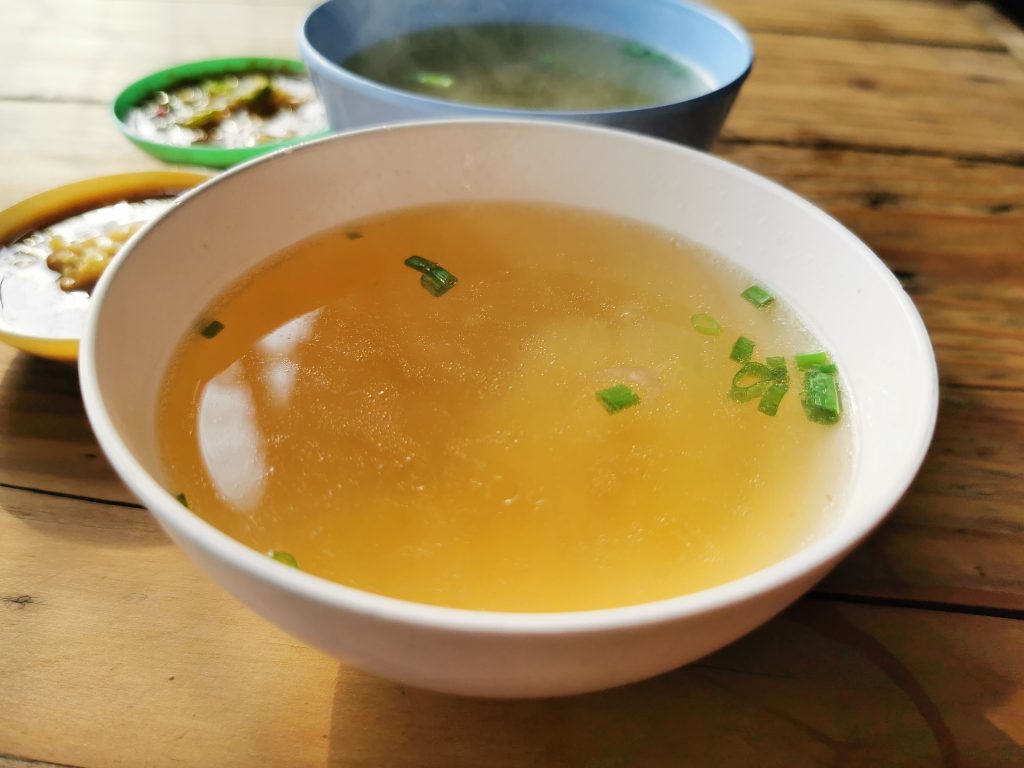
Water, clear broth or bouillon, apple juice, white grape juice, and sports drinks. Plain jelly, ice lollies without fruit pieces or cream, clear fizzy drinks, black coffee and plain tea. Clear hard sweets count too and are worth having around.
The test is whether you could read print through it. Coffee with milk in it fails that test, and so does orange juice with pulp, even though both are obviously liquid. If in doubt, hold it up to the light.
The Color Rule
Nothing red, purple or orange. This trips people up constantly, because those are exactly the flavors everything comes in, and the reason for it isn’t arbitrary.
Red and purple dyes can stain the lining of the colon and look like blood or inflammation on camera. That either produces a false alarm or obscures something real, and both waste the procedure. Some clinics extend the rule to orange, so lemon, lime, and plain flavors are the safe end of the shelf.
How Long You Actually Need to Be on Low Residue
This is worth knowing, because the instruction you get varies enormously and a lot of people restrict for longer than they need to. Some clinics say one day, some say three, and some say five. The variation isn’t because your colon differs from anybody else’s.
It’s because the evidence underneath the recommendation is thin. Gastroenterology guidelines acknowledge this openly and don’t specify a number, and the recommendations that do exist are graded as low quality. Practice varies widely between centers as a result.
A trial comparing three days of low residue against one found no statistically significant difference in how adequate the preparation turned out to be. Later work has pointed in the same direction. The current thinking is that diet plays a secondary role and the prep solution is doing most of the actual work.
None of which means ignoring your instructions, because your clinic is the one reading the result and they set the protocol. It does mean that if five days of restriction is genuinely difficult for you, that’s worth raising rather than enduring in silence. The answer may well be that one day is fine.
If You Have a Bowel Program
Here is the part nobody addresses, and it matters more than the food lists do. A low-residue diet is a low-fiber diet, and fiber is one of the levers you use to keep stool consistency where it needs to be. Several days without it will change what your bowel is doing, usually in the direction of harder and slower.
Then the clear liquid day and the prep solution empty everything, and you come out the other side with a routine that has been comprehensively interrupted. There’s no published guidance on re-establishing a bowel program afterward, which is a real gap given how many people with neurogenic bowel are also due for screening. The wider picture is in the piece on how a bowel program actually works.
Worth raising in advance with whoever manages your bowel care rather than working it out afterward. Plan for the program taking a week or two to settle back down. And expect to need your usual adjustments in the meantime rather than assuming it’ll right itself.
Two Other Things That Get Missed
Fluid, if you manage your bladder carefully. A clear liquid diet means drinking a great deal, and the prep dehydrates you on top of that, so the fluid genuinely matters. If you normally restrict intake to make bladder management workable, these two requirements pull directly against each other. That’s worth thinking through in advance rather than choosing badly at midnight.
Protein, if you’re healing anything. A clear liquid day provides essentially no protein, and neither diet is nutritionally complete. If you have a pressure injury healing, or you’re at risk of one, a couple of days at very low intake isn’t ideal and is worth mentioning to whoever manages the wound. Longer restrictions for GI reasons need proper dietetic input rather than a printed sheet.
And blood sugar, if you’re diabetic. A clear liquid diet is mostly sugar, which is a problem in one direction, while eating nothing solid is a problem in the other. Most clinics are good about this and will recommend low-sugar sports drinks and specific timing. Ask rather than improvise.
Getting Through It
Shop before you start rather than during. Once you’re on clear liquids, you will want variety,y and there’s very little available, so five different things beat a lot of one thing. This is the single easiest improvement to the experience.
Savory matters more than people expect. Broth is what stops a clear liquid day from feeling like twelve hours of sweets, and most people badly underestimate how much they’ll want something salty by mid-afternoon. Buy more of it than seems reasonable.
Temperature helps too, for the same reason. Hot broth and a cold ice lolly feel like genuinely different experiences even though they’re both clear liquids. That variation makes the day considerably easier than drinking the same thing at the same temperature from morning to night.
Ask Which One and For How Long
If you’ve been handed instructions that just say liquid diet, go back and ask which one they mean. The difference between clear liquids and a low residue diet is the difference between eating and not eating, and getting it wrong in either direction causes problems.
Ask how many days as well, particularly if restriction is difficult for you for any reason. The number you’ve been given may reflect your clinic’s habit rather than a clinical requirement, and there’s more room in it than the sheet suggests. Nobody will volunteer that.
And if either diet is going to interact with something else you manage, say so early. Bowel programs, bladder management, wound healing, and blood sugar are all affected by these restrictions, and not one of them appears on the standard instruction sheet.
This is general information rather than medical advice. Follow the instructions from the clinic performing your procedure, and speak to them directly if any part of it is difficult for you.