
Every trip starts with the same fork in the road: piece the vacation together yourself, or hand the whole thing to an all-inclusive resort. For most travelers, that’s a question of taste and budget. For wheelchair accessible vacations, it’s mostly a question of energy, because every hotel, shuttle, restaurant, and excursion you book yourself is one more thing you have to verify before you can trust it. Neither answer is wrong. They’re just built for different trips, and it helps to be honest about which one you’re actually taking.

The Benefits Of Going All-Inclusive
The strongest argument for a resort is that you only have to vet one property instead of a dozen moving parts. The good ones treat adaptive equipment as standard inventory: beach wheelchairs with balloon tires, pool lifts that are installed and working rather than stored in a closet, roll-in showers in more than one room category, and an accessible shuttle from the airport. That’s not exotic anymore, since wheelchair accessible hotel design has come a long way in a short time, and the properties that have invested in it aren’t shy about saying so. Once you’ve confirmed the details, the rest of the week mostly runs itself.
There’s a real quality-of-trip payoff in that. The energy you’d spend confirming whether Tuesday’s restaurant has a step at the door goes toward actually enjoying Tuesday. The tradeoff is the compound effect, because you’re choosing from the resort’s menu of activities rather than your own, and if the property oversold its accessibility, you’ve concentrated your whole vacation in one bad bet. That’s why the verification call matters more here, not less.
The Case for Booking It Yourself
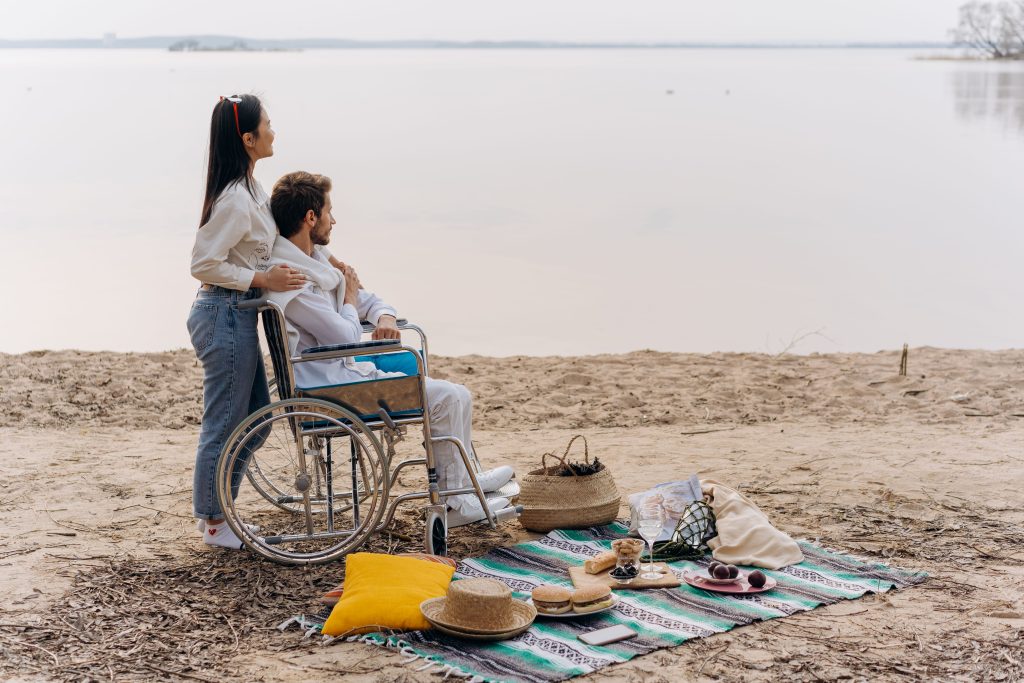
Build the trip yourself and the itinerary answers to nobody but you. If the whole point is a specific coastline, some of the best wheelchair accessible beaches in the world aren’t attached to any resort, and no activities desk is going to route you there. Same goes for the outdoors, where wheelchair accessible hiking trails with boardwalk or packed-gravel surfaces are increasingly listed by park systems, and a freewheel attachment or all-terrain front wheel opens up routes a standard caster setup can’t touch. DIY usually costs less, too, and you’re not paying for a buffet you might not even want.
The obvious price you pay for booking a trip yourself is in the sweat equity. Every link in the chain is your job to figure out. The hotel, the rental van, the restaurant entrances, the distance from accessible parking to the trailhead, all of it needs checking, and one unverified assumption can eat a whole day of the trip. Reviews from other wheelchair users are worth more than any star rating here, so hunt down firsthand trip reports before you put money on anything. Plan on the research taking real hours, not an evening.
How to Actually Decide
Instead of starting with a destination, start with an honest look at how much energy you can afford to put into the planning process. Are you traveling with a partner or kids with their own set of itinerary and needs? Is your travel buddy willing to take on some of the logistical to-do list? Depending on your answer, the extra cost of having a one-stop-shop approach that a resort offers might outweigh the additional cost.
On the other hand, if this trip exists because of one specific thing you’re dying to do or see, build the vacation around it yourself. No resort excursion list will ever care about your bucket list as much as you do.
Traveling abroad changes the math a bit, too. International properties don’t have to follow the ADA, and accessibility standards are all over the place from one country to the next. The State Department’s guidance for travelers with disabilities is worth a read before you put a deposit on anything overseas. The further you get from U.S. rules, the more that single-property resort bet starts looking like the safer hand.
Either Way, Verify Like a Skeptic
Whichever route you pick, the word accessible on a booking site means almost nothing until someone gives you numbers. Call the property directly and ask for doorway width, bed height, roll-in shower or tub, the path of travel to the restaurant and pool, and how many beach wheelchairs they actually own. Ask staff to text photos of the specific room, and get the room type confirmed in writing, because a reservation number alone doesn’t guarantee it. U.S. hotels are required to describe their accessible features in enough detail for you to judge the fit, a standard spelled out in the ADA’s hotel reservation requirements, so make them meet it.
The wheelchair accessible vacations people actually enjoy are the ones matched to their energy, not the ones that photograph best. A resort week where everything works beats a packed itinerary you spend managing, and a self-built trip around the thing you love beats a compound you’re bored of by Wednesday. The only real mistake is skipping the verification calls, so whichever way you go, make them.