
There is a moment that happens in almost every household that has ever had a wheelchair in it. The chair is no longer the right chair. Somebody outgrew it, insurance finally approved something better, or the person who used it is gone. Now it sits in a garage taking up space, and you know perfectly well that somebody out there needs it, and you have no idea who to call.
If you want the short version, here it is. The fastest place to find out where to donate a wheelchair is your state’s assistive technology reuse program, and the second fastest is your nearest independent living center. Both are local, both are free to contact, and between them they can usually tell you within one phone call whether anyone in your area wants what you have. The rest of this page covers how to find them, which national charities take what, and why a power chair is a completely different errand than a manual one.
If the chair is not the only thing you are clearing out, the same phone tree handles beds, lifts, bathroom safety equipment and sealed supplies. The guide to where to donate medical equipment breaks down what each category can and cannot be donated, including why hospital beds are almost always a local handoff.
The Fastest Way to Find a Place Near You
Almost everybody searching for wheelchair donations is really asking a local question, and the honest answer is that the best taker is usually somebody within driving distance rather than a national name you recognize.
Start here. Every state and territory runs a federally funded assistive technology program, and most of them operate equipment reuse or exchange services built for exactly this. Some run online exchanges where you can list a chair yourself. You can find your state’s program through the Administration for Community Living, which maintains the national directory. This is the most underused resource for this problem, and it should be your first call.
After that, these local sources are consistently productive:
- Independent living centers. Every region has at least one; they are staffed largely by disabled people, and they either run a reuse program or know precisely who does.
- Medical equipment loan closets. Communities run lending libraries for durable medical equipment, usually attached to a hospital, a house of worship, a senior center, or a disease-specific nonprofit chapter. They take donations and lend equipment out for free.
- Hospital and rehab discharge planners. Ask the social work department. They run into equipment shortages constantly, and they know where the local stock comes from.
- Senior centers and your area agency on aging. Frequently maintain their own lending inventory.
- Houses of worship with a health ministry. Small, informal, and often delighted to receive a chair.
- Local Facebook groups and Buy Nothing groups. Not a charity, but used mobility equipment moves fast this way, often to somebody paying out of pocket who cannot wait on insurance.
Two things make these calls go faster. Know whether your chair is manual or powered before you dial, and have a rough answer ready for what condition it is in. Those are the first two questions you will be asked every time.

Check the Chair Before You Call Anyone
Working condition requirements are the number one reason donations get turned away at the door. Spend five minutes with the chair first.
Roll it and listen. Check that the wheels turn freely, the casters swivel without grinding, and the bearings are not seized. Test the brakes. Squeeze the seat and back upholstery to see whether it is torn, stained through or compressed flat. Look at the frame for cracks, bends or rust at the joints, especially around the footplates and the cross brace. Confirm the parts are all there, because a chair missing a footrest is a chair somebody has to source parts for.
The useful test is simple. Would you hand this chair to a friend and feel good about it? If not, most organizations will land in the same place. That does not make the chair worthless, and there are still options further down this page, but it probably is not headed for a reuse program.
Worth knowing: cosmetic wear is almost never a dealbreaker. Scuffed paint, a faded seat, and worn hand rims are normal on a chair that got used, and charities expect it. What stops a donation is anything structural or safety-related.
Donating a Power Chair Works Differently Than a Manual One
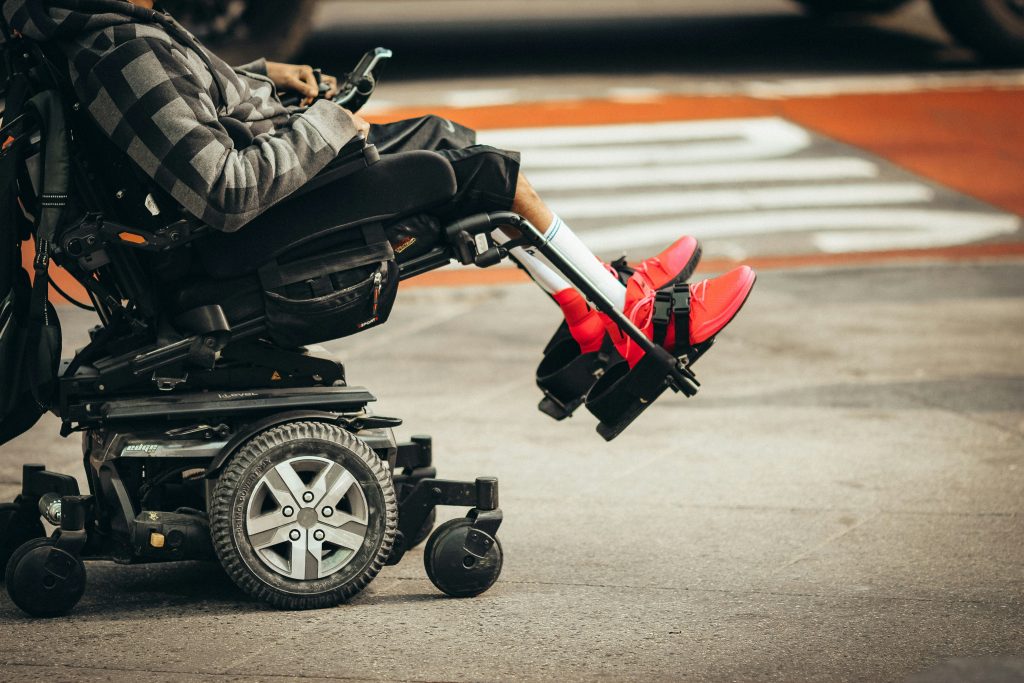
This is the part most guides skip, and it causes the most wasted effort. If you want to donate an electric wheelchair, you are working with a much shorter list of takers than someone donating a manual chair.
The reasons are practical. A power chair can weigh 250 to more than 400 pounds, which puts it past standard parcel shipping and into freight, and that cost alone rules it out for many programs. Batteries are the second obstacle, because sealed lead-acid batteries are heavy and lithium batteries fall under hazardous materials shipping rules, so plenty of organizations will not move them at all. Batteries also last only a few years, meaning a charity that accepts a donated power chair often has to buy new ones before it can go to anybody.
Then there is seating. Power chairs are usually built around one person’s measurements, with custom cushions, molded backs, specialty controls, or a tilt system programmed to that user. Refitting that to a different body takes a technician, and not every program employs one.
This is why you will notice the large international programs accept manual chairs only. Partly weight and shipping, and partly that a power chair is not much use in a community without reliable electricity to charge it.
So aim local with a power chair. Your best odds are regional reuse programs, state assistive technology reuse operations, and specialty refurbishers with technicians on staff. Call before loading anything into a vehicle, ask specifically about powered mobility, and ask whether they want batteries left in or removed. If they say removed, batteries go to a battery recycling drop-off rather than the trash.
Nationwide Organizations That Accept Wheelchair Donations
If nothing local pans out, these operate across the country.
Joni and Friends Wheels for the World
Collects primarily manual wheelchairs, has them refurbished, then distributes them internationally with a fitting by a trained physical therapist. Collection sites operate nationwide. Manual only in most cases, so call before assuming a power chair is welcome. Choose this one if you want your chair matched to a specific person rather than resold.
Global Mobility USA
Accepts wheelchairs along with walkers, crutches, and canes, shipped or dropped at designated locations, distributed through charitable partners internationally. A good fit when you have several pieces of equipment to clear at once rather than a single chair.
Project C.U.R.E.
Operates distribution centers in several states and accepts wheelchairs and other durable medical equipment for delivery to under-resourced hospitals and clinics worldwide. Because they equip medical facilities rather than individuals, condition standards run strict. Call your nearest center to confirm what they are taking that month.
American Red Cross
Worth addressing directly, because many people search for Red Cross wheelchair donation specifically and then hit a dead end. The national organization does not run a standing medical equipment donation program. Some local chapters have accepted equipment for community response work, but it varies by chapter and by what is happening locally. Call your chapter and ask rather than arriving with a chair.
Goodwill Home Medical Equipment
Based in Bellmawr, New Jersey, this program accepts gently used wheelchairs, walkers, crutches, and scooters, refurbishes them, and resells them at low cost. Note this is a specific Goodwill program rather than something every Goodwill offers, so do not assume your neighborhood donation center handles medical equipment.
Regional Programs Worth Checking
Regional operations tend to have more flexibility on condition and equipment type than national programs, and they are frequently the better bet for powered mobility.
Changing Hands Equipment Reuse Program
Run by UCP of Central Pennsylvania out of Camp Hill. Collects both manual and power wheelchairs plus walkers, canes, and other assistive devices, then passes them to local residents at low or no cost. One of the more reliable options for placing a power chair.
Friends of Disabled Adults and Children
A large Georgia operation that refurbishes wheelchairs and medical equipment in-house and provides it to people with disabilities at little or no cost. Because they run their own repair shop, they can take equipment that needs work.
Wheels of Mercy
A California group that collects used wheelchairs, refurbishes them, and distributes them where they are needed. Donations are handled by arrangement, so contact them directly on logistics.
If you would rather give toward advocacy and support work than hand over equipment, the charities supporting wheelchair users and mobility awareness are a different kind of giving that still moves the needle.
What to Do With an Old Wheelchair No One Will Take
Sometimes the chair has genuinely reached the end. Cracked frame, seized drivetrain, water damage, missing components nobody manufactures anymore. If you have called around and struck out, you still have better options than the curb.
Donate it for parts. This is the move most people miss. A refurbisher who will not take your whole chair may happily take it as a parts donor, because armrests, footplates, casters, wheels, joysticks, and cushions are exactly what they run short of. Ask the question directly. Not “will you take this chair” but “can you use this for parts.”
Recycle the metal. Frames are aluminum or steel, and scrap yards take both. Call ahead about whether they want it disassembled.
Handle batteries separately. Power chair batteries never belong in household trash. Auto parts stores, battery retailers, and household hazardous waste sites take them, and lead-acid batteries often carry a small core refund.
Check municipal bulky waste collection. Many towns run collection days for large items, and some specifically handle medical equipment.
Sell or give it away locally. Marketplace listings and community groups move used equipment quickly. Be honest in the listing about condition.
Whether You Can Claim a Tax Deduction
A donated wheelchair can be deductible, but the rules for property differ from the rules for writing a check.
The organization has to be a qualified charity, which you can verify through the IRS Tax Exempt Organization Search tool. You have to itemize on Schedule A, because the newer deduction for people who do not itemize covers cash contributions only and will not include a chair. Your deduction is based on fair market value, meaning what the used chair is worth now rather than what it cost new. Get a written receipt at the time of the donation, since reconstructing one later is a headache. If your total noncash giving for the year runs over $500, you file Form 8283, and above $5,000 you need a qualified appraisal. The details are in IRS Publication 526, and anything complicated is worth a conversation with a tax professional rather than a guess.
If You Are the One Who Needs a Wheelchair
Plenty of people land on pages like this looking for the opposite of a place to give. If you are trying to get a donated wheelchair rather than hand one over, most of the organizations above work in both directions, since taking donations is how they build the stock they give away. Start with your state assistive technology program and your local independent living center, both of which can tell you what is actually available near you.
Loan closets are worth knowing about if your need is temporary, because borrowing costs nothing and does not use up a benefit you might need later. And if the underlying problem is that you cannot get equipment funded at all, it helps to understand which conditions qualify for disability benefits, because coverage for mobility equipment often follows from that determination.
Frequently Asked Questions
Where is the best place to donate a wheelchair?
For a manual chair in good condition, a national program like Joni and Friends or Global Mobility USA is the simplest route. For a power chair, or any chair needing minor work, a local reuse program or your state assistive technology program will serve you better. The best choice is usually whichever one answers the phone and confirms it wants what you have.
Where can I donate a wheelchair near me?
Your state assistive technology program is the fastest way to find local options, followed by your nearest independent living center. Medical equipment loan closets, hospital discharge planners, senior centers and houses of worship with health ministries are all worth a call. Local options usually beat national ones on convenience and on what they will accept.
Who takes used wheelchairs?
Reuse and refurbishment charities, medical equipment loan closets, independent living centers, state assistive technology reuse programs, and some hospital and faith-based ministries. Used is the norm rather than the exception here, and nobody expects a donated chair to be new. Working condition is what matters.
Can you donate an electric wheelchair?
Yes, but to a shorter list. Weight, battery shipping restrictions, and custom seating make power chairs harder to place, and most international programs take manual chairs only. Focus on local and regional reuse programs and ask specifically about powered mobility before transporting anything.
Do wheelchair donations have condition requirements?
Nearly always. Most organizations require the chair to be in safe working order with all parts present and no frame damage. Cosmetic wear is fine. If the chair is not usable as is, ask whether they accept parts donations instead, which is a separate question with a much better hit rate.
What do you do with old wheelchairs that cannot be donated?
Offer it as a parts donation to a refurbisher first, since that often gets a yes when the whole chair does not. Otherwise, scrap the frame for metal recycling, take batteries to a battery or hazardous waste collection point, and check whether your municipality runs a bulky item collection day.
Is a donated wheelchair tax deductible?
It can be, if the recipient is a qualified charity and you itemize your deductions. The deduction is based on the chair’s current fair market value, not its original price, and you need a written receipt from the organization. Noncash giving over $500 for the year requires Form 8283.
How do I get a donated wheelchair?
Contact your state assistive technology program and your nearest independent living center, both of which track locally available equipment. Loan closets are the fastest route for short-term needs. Many charities that accept donations also distribute them, so it is reasonable to ask directly whether they have anything that fits you.
The Bottom Line
A wheelchair sitting unused is a genuinely valuable object to somebody who does not have one. The work is just matching it to the right taker, and that comes down to three questions answered before you start driving: what condition is it in, is it manual or powered, and who nearby accepts that combination. Start with your state program, make the phone call first, and ten minutes of asking saves you a wasted trip and gets the chair to somebody who has been waiting on it.






One Comment