
Medical equipment accumulates in a way almost nothing else does. A walker from a hip replacement, a shower chair somebody used for three months, a hospital bed that came home after a hospice stay and now fills a room nobody goes into. It is expensive equipment, it is in usable shape, and it is doing nothing.
The short version is this. If you are trying to work out where to donate medical equipment, the fastest route is your state’s assistive technology reuse program, and your second call should be the nearest independent living center or medical equipment loan closet. Local beats national almost every time, because local programs handle bulky items, they take a wider range of gear, and they will tell you in one conversation whether they want what you have. What follows is organized by category, because the honest answer changes a lot depending on whether you are holding a rollator or a CPAP machine.
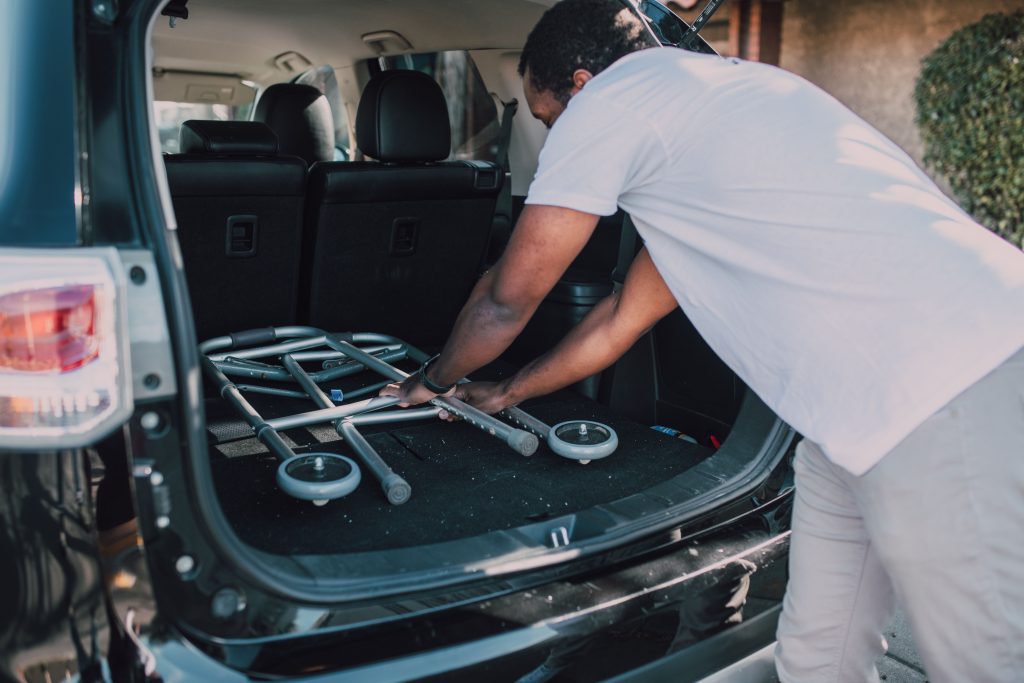
Start With a Local Program
Every state and territory runs a federally funded assistive technology program, and most operate equipment reuse or exchange services built for exactly this purpose. Some run online exchanges where you list an item yourself and a local family claims it. Find yours through the Administration for Community Living, which maintains the national directory of state programs. This is the most underused resource in the entire process, and it belongs at the top of your list.
From there, it helps to know that the local network sorts itself by equipment type rather than by organization name. Loan closets, which are community-run lending libraries usually attached to a hospital, a house of worship, a senior center,r or a disease-specific nonprofit chapter, are your best bet for mobility aids and bathroom safety gear. Hospice organizations and hospital social work departments are where beds and lifts actually move, because those are the items they run short of. Independent living centers tend to know the assistive technology and home modification landscape, and nonprofit clinics and mutual aid groups are the outlet for sealed supplies that nobody else will handle.
Two questions come up on every one of those calls, so have the answers ready. What exactly is the item, and what condition is itin ?n. Knowing whether your walker has all four rubber tips or whether your bed’s motor still works saves everybody time, and it is often the difference between a yes and a “call us back.”
What Most Reuse Programs Accept and What They Refuse
There is a fairly consistent line across the industry, and understanding it upfront saves you a lot of wasted phone calls. It comes down to two questions: can the item be disinfected, and was it built for one specific body? Almost every refusal you will run into traces back to one or the other.
Generally accepted: durable equipment with hard surfaces that can be cleaned and disinfected, in safe working order, with all its parts. Mobility devices, bathroom safety equipment, beds, lifts and hard-framed supports all sit comfortably here. Sealed supplies still in unopened packaging belong in this column too.
Generally refused: anything soft, porous or single-patient. That means used mattresses and foam cushions in questionable condition, opened disposables, anything that contacts mucous membranes, anything with cracked or damaged structure, and anything that has been recalled. Sharps are never donated under any circumstances.
Cosmetic wear is not a problem anywhere. Scuffs, faded paint, and worn grips are expected on equipment that got used for its intended purpose. What stops a donation is structural damage, missing components,s or a hygiene issue that cannot be resolved with disinfectant.
Equipment Category by Category
Wheelchairs and Power Chairs
Manual wheelchairs are among the most in-demand donations there are, and nearly every program on this page will take one in working order. Power chairs are a different errand entirely, because weight, battery shipping restrictions, and custom seating cut the list of takers down sharply, and most international programs handle manual chairs only. That deserves its own page, so the full rundown lives in the guide to where to donate a wheelchair: the condition checklist, why power chairs need regional refurbishers with technicians on staff, and the national and regional programs that specialize in mobility devices.
Walkers, Rollators, Canes and Crutches
The easiest category to place and the one loan closets go through fastest. Check that rubber tips and hand grips are intact and not worn through, that rollator brakes engage, and the seat is not torn, and that folding mechanisms still lock. Replacement tips cost a few dollars,s and putting new ones on before you hand the item over meaningfully improves whether it gets used. Knee scooters and hemi walkers are worth asking about separately, since some programs treat them as specialty items with their own waiting list.
Hospital Beds, Patient Lifts and Transfer Equipment
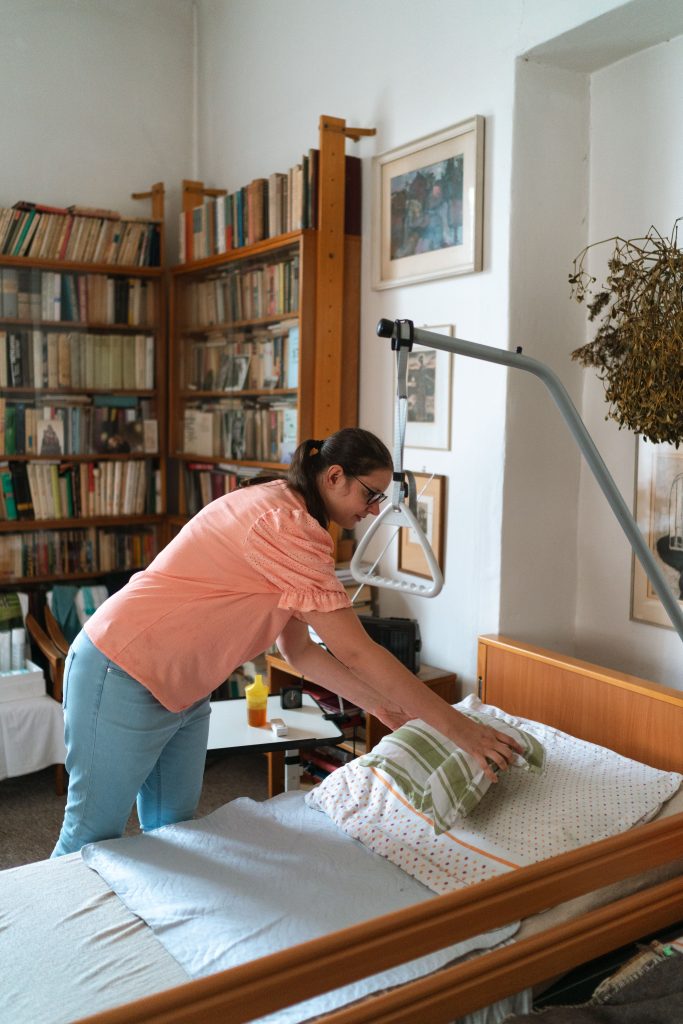
A hospital bed is the hardest piece of equipment to place, and the one families are most desperate to find, which is a frustrating combination. If you want to donate a hospital bed, understand up front that shipping is off the table. A semi-electric bed runs 150 to 200 pounds, broken down into head panel, foot panel, frame,e and mattress, and freight on that costs more than the bed is worth. That makes this a local errand, and searching “medical equipment donation near me” will get you further than any national charity’s contact form.
Start with your state assistive technology reuse program and your area’s loan closets, because those are the outfits that will actually send a truck. Pickup is more common for beds than for anything else on this list, and it often is not advertised anywhere on a website. You have to ask. Hospice organizations are the other strong bet, since they cycle beds in and out constantly and know which families are waiting.
Before you call, know four things: whether the bed is manual, semi-electric or fully electric, whether the motor runs and the hand control works, whether all four side rails are present, and what condition the mattress is in. That last one decides a lot. Foam mattresses absorb fluid, and a used one in questionable shape is usually refused even when the frame is welcome, so expect to hand over the bed without it. Alternating-pressure and low-air-loss mattresses are their own category and are almost always declined secondhand.
Patient lifts follow the same rules with one wrinkle: the sling. A Hoyer-style lift without a sling is a lift the program has to buy a sling for, which cuts its value considerably. Slings are fabric, so they are only accepted when they are genuinely clean and not frayed at the straps, and worn stitching is a safety issue rather than a cosmetic one. Bring the base, the boom, the pump or actuator, the charger if it is electric, and the sling if you still have it.
Transfer equipment is the easy end of this category. Transfer boards, gait belts, bed rails, trapeze bars and pivot discs are light, cleanable and constantly requested, and programs take them without much fuss. Anything with a padded or fabric surface gets judged the same way a sling does.
Bathroom Safety Equipment
Shower chairs, tub benches, commodes, raised toilet seats and grab bars are all commonly accepted, provided the surfaces are hard plastic or metal that can be disinfected. These items are simple, they are constantly requested, and they are cheap for a program to sanitize. Commodes need to be genuinely clean before you hand them over, and any item with a fabric or foam seat is a harder sell. Grab bars are the one thing in this group where the mounting hardware matters, so keep the screws and anchors with the bar.
Respiratory Equipment
This is the most complicated category and the one where people most often get turned down. CPAP machines, oxygen concentrators,s and ventilators are prescription devices, and most U.S. charities will not accept used ones because of infection control concerns and the regulatory questions around redistributing prescribed medical devices. Some international humanitarian programs do accept them, but you cannot assume it.
A few firm rules regardless of where you end up. Masks, tubing, filters, cannulas, and humidifier chambers are single-patient items and are never donated. Do not attempt to donate an oxygen cylinder, because pressurized gas cylinders have their own handling and certification requirements. If you have a CPAP or a concentrator you want to place, call your sleep clinic, your durable medical equipment supplier or the manufacturer and ask what they recommend in your area rather than driving it to a thrift store.
Unopened Supplies and Diabetic Testing Gear
Sealed, unopened, and unexpired supplies are welcome in many places that will not take equipment. Test strips, lancets still in the box, ostomy wafers and pouches, catheters, wound dressings, gloves and adult incontinence products all fall here, and nonprofit clinics and mutual aid groups distribute them constantly. Diabetic supplies move especially fast, since the people who need them need them every month and cannot wait on a refill that insurance denied.
The rules are strict though. Nothing opened, nothing expired, nothing that has been stored somewhere damp or hot. Used lancets and needles are sharps and go to a sharps disposal program, never into a donation box. Prescription medication is a separate legal matter entirely and generally cannot be redistributed once it has been dispensed, though a number of states operate their own drug repository programs, so check whether yours does before assuming.
Eyeglasses, Hearing Aids and Prosthetics
Eyeglasses and hearing aids have their own well-established pipeline through Lions Clubs International, which collects both through local clubs and regional recycling centers and accepts hearing aids of any age or model. Drop boxes turn up in optometry offices, libraries and community centers, so this is usually the one category where you do not need to make a phone call first. Prosthetic limbs and orthotic braces are rarely reusable as complete units because they are fitted to an individual, but several programs recycle the components, so ask about parts rather than the whole device.
National Options and Where They Fall Short
Most national charities in this space are built around mobility devices, which makes them the wrong call for a bed, a lift or anything respiratory. If you are placing a wheelchair, walker or scooter and nothing local worked out, the wheelchair guide linked above covers the national and regional programs in detail. For everything else, the list is genuinely short.
Project C.U.R.E. is the broadest of them, because it outfits under-resourced hospitals and clinics worldwide rather than individuals, so it takes a wider range of clinical equipment than the mobility charities do. That same purpose is why its condition standards run strict: facility-grade means facility-grade. Call your nearest distribution center to confirm what they are accepting, since needs shift with whatever shipment they are assembling.
Beyond that, sealed supplies generally move through nonprofit clinics, free clinics and mutual aid networks rather than any national brand, and eyeglasses and hearing aids go through Lions Clubs as described above. Respiratory equipment has no reliable national home in the United States at all. If you would rather direct your giving toward advocacy and support work than hand over equipment, the charities supporting wheelchair users and mobility awareness are a different kind of contribution that still matters.
How to Prepare Equipment Before You Hand It Over
A little preparation is the difference between a donation that gets used next week and one that sits in a warehouse. Most of these programs run on volunteer labor and a thin budget, so an item that needs work goes to the back of the queue. Fifteen minutes on your end can move it to the front.
- Clean every hard surface. Wipe it with a disinfectant and let it dry fully. This is the single biggest factor in whether an item gets accepted on the spot.
- Gather the parts. Footrests, armrests, remotes, chargers, slings, wrenches, hand controls, mounting hardware. An incomplete item costs the program money to make whole.
- Note the make, model and serial number. Programs need those to source parts and check for recalls, and the manual is a bonus if you still have it.
- Test what moves. Motors, brakes, folding mechanisms, height adjustments. Report honestly what does not work rather than letting them discover it.
- Leave sealed supplies sealed. Do not consolidate boxes or repackage anything, because a broken seal turns a usable donation into medical waste.
- Ask about batteries. Some programs want them left in and some want them out. Removed batteries go to a battery recycling drop-off, never household trash.
What to Do With Equipment No One Will Take
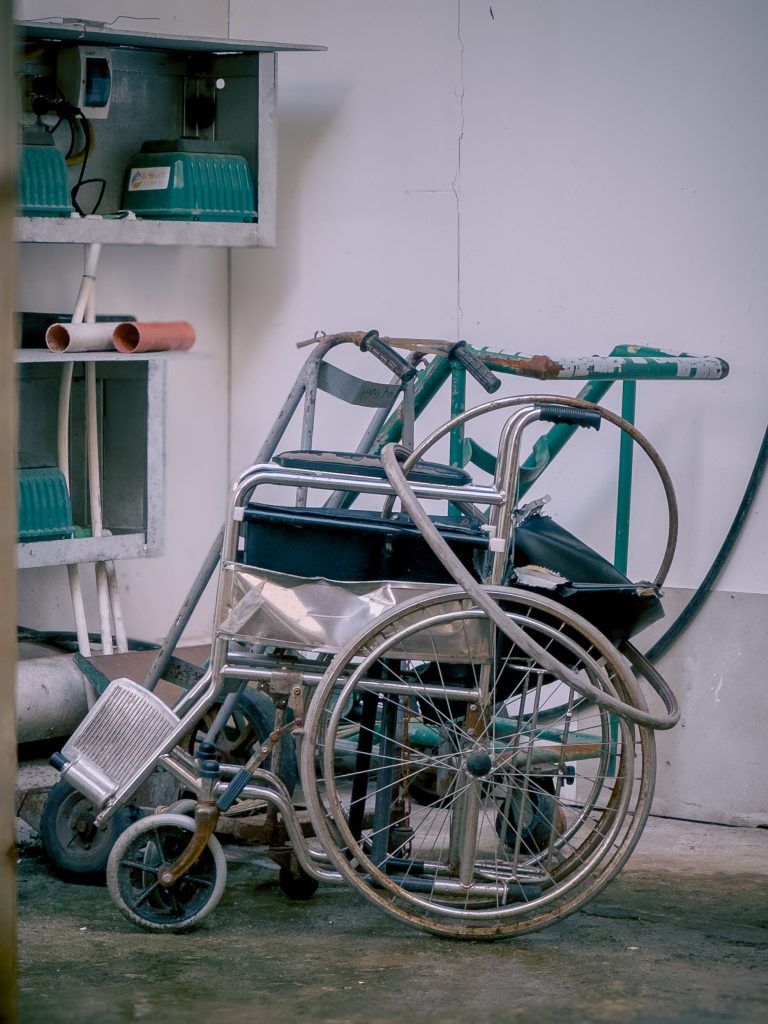
Sometimes an item has reached the end of its usable life, and you still have better options than the curb. The move almost nobody thinks to make is offering it for parts: a refurbisher who declines your whole item may gladly take it as a parts donor, because casters, armrests, footplates, motors and hardware are exactly what they run short of. Ask specifically whether they can use it for parts, which is a different question with a much better answer rate.
Failing that, metal frames and bed rails go to a scrap yard, batteries and electronics go to a household hazardous waste site or a battery retailer, and many towns run bulky waste pickup days that handle medical equipment specifically. The wheelchair guide walks through each of those routes in more detail. One category-specific note worth making here: foam mattresses, cushions and slings that get refused are genuinely trash, and no amount of calling around changes that.
Whether You Can Claim a Tax Deduction
Donated equipment can be deductible if the recipient is a qualified charity and you itemize on Schedule A, since the newer deduction for people who do not itemize covers cash contributions only. Your deduction reflects fair market value, meaning what the used item is worth now rather than what it cost new, and you need a written receipt from the organization at the time of the donation. One change worth knowing for 2026: itemized charitable deductions now only count above a floor of 0.5% of your adjusted gross income, so a single donated walker will not clear the threshold on its own for most households. Noncash giving above $500 for the year requires Form 8283, and above $5,000 you need a qualified appraisal. The specifics are in IRS Publication 526, and anything complicated deserves a conversation with a tax professional rather than a guess.
If You Need Equipment Instead
A lot of people arrive at a page like this from the other direction. If you need equipment rather than have some to give, the same organizations are your starting point, because accepting donations is how they build the inventory they distribute. Loan closets are the fastest option for a temporary need, since borrowing costs nothing and does not consume an insurance benefit you may want later for something better. And if the real obstacle is that you cannot get equipment funded at all, it helps to understand which conditions qualify for disability benefits, because coverage for durable medical equipment often follows from that determination.
Frequently Asked Questions
Where can I donate used medical equipment near me?
Start with your state assistive technology reuse program, then your nearest independent living center and any medical equipment loan closets in your area. Hospital discharge planners, senior centers, area agencies on aging and hospice organizations are all worth calling. Local programs consistently accept a wider range of items than national ones, and they can handle bulky equipment that cannot be shipped.
Who takes used hospital beds near me?
Your state assistive technology reuse program and local medical equipment loan closets are the two best calls, followed by area hospice organizations and hospital social work departments. Beds are too heavy to ship, so this is always a local handoff, and pickup is frequently available even when a website does not mention it. Have the bed type, motor condition and mattress condition ready before you dial, and expect the foam mattress to be judged separately from the frame.
Can you donate a walker?
Yes, and it is the easiest donation in this whole category. Loan closets go through walkers and rollators faster than almost anything else, so you will rarely have trouble finding a taker. Check that the rubber tips are not worn through, that rollator brakes engage and that the folding mechanism still locks. New tips cost a few dollars, and putting them on first meaningfully improves the odds the item gets used right away.
What medical equipment can be donated?
Durable items with hard, cleanable surfaces in safe working order with all their parts. Wheelchairs, walkers, rollators, canes, crutches, hospital beds, patient lifts, shower chairs, tub benches, commodes and raised toilet seats are all commonly accepted. Sealed and unexpired supplies are also widely welcome, often by organizations that will not take equipment at all.
What medical equipment cannot be donated?
Opened disposables, expired supplies, used sharps, anything contacting mucous membranes, soft or porous items in poor condition, structurally damaged equipment and recalled products. Prescription respiratory devices are usually refused in the United States, and dispensed prescription medication generally cannot be redistributed at all. Foam mattresses and cushions in questionable shape are refused nearly everywhere, even when the frame they came with is accepted.
Can you donate a used CPAP machine?
Rarely to a U.S. charity. CPAP machines are prescription devices and most domestic programs decline used ones over infection control and regulatory concerns, though some international humanitarian programs accept them. Masks, tubing and humidifier chambers are single-patient items and are never donated. Ask your sleep clinic or equipment supplier what local options exist.
Does Goodwill take used medical equipment?
Only at specific locations. Goodwill Home Medical Equipment in Bellmawr, New Jersey is a dedicated program that refurbishes and resells mobility equipment, but the typical neighborhood Goodwill donation center is not equipped to accept or refurbish medical devices. Call before loading anything into a vehicle.
Who picks up donated medical equipment?
Local reuse programs and loan closets frequently arrange pickup for heavy items like hospital beds and patient lifts, because they know families cannot transport them. Pickup is far less common for small items, which are usually drop-off only. Ask directly when you call, since it is often available even when it is not advertised anywhere.
The Bottom Line
Equipment sitting unused in a spare room is genuinely valuable to somebody who cannot afford it, and the reason so much of it ends up in a landfill instead is that nobody knows the local reuse network exists. It does. The question of where to donate medical equipment almost always resolves to a program within driving distance, sorted by what you are holding: mobility aids to loan closets, beds and lifts to hospice and hospital contacts, sealed supplies to nonprofit clinics. Clean the item, be honest about what does not work, ask about parts if the whole thing gets turned down, and make the phone call before you load anything into a car.


3 Comments