This is general information rather than medical advice. Allodynia has many causes, and treatment depends on which one applies, so a clinician needs to assess it.
Limited mobility brings a whole catalog of pain and sensation problems, and most of them get discussed as one thing. Poor circulation and the aching that comes with it. Neuropathy. Muscle spasms. Nerve pain that arrives without warning and leaves the same way. Skin that has become strange after years of pressure and contact it was never designed for.
They overlap, they make each other worse, and after long enough you stop separating them. Partly because it’s exhausting to explain, and partly because most people respond the same way, whichever one you name. My own version is feet sensitive enough that ordinary foot care is genuinely unpleasant, which is uncomfortable rather than disabling and sits at the mild end of all this.
Allodynia is something different, though, and it deserves to be pulled out of the pile. It has a specific mechanism, a clinical definition, and a name, and it is probably the single most dismissed symptom in that whole catalog. The reason is simple enough: describing it accurately makes you sound unreasonable.
What Allodynia Actually Is
Allodynia is pain from something that should not be painful. A bedsheet, a shirt seam, a waistband, someone resting a hand on your arm, a breeze across your skin, or shower water at a temperature that’s objectively fine. The list sounds absurd written down, which is a large part of the problem.
The important thing is that this isn’t a lowered tolerance or a heightened sensitivity in the ordinary sense. It’s a fault in how the signal is being processed. Normally, touch and pain travel on separate systems. Still, after nerve or tissue injury, touch signals can access pain pathways and, in clinical terms, are falsely interpreted as pain.
The underlying process is usually central sensitization, meaning neurons in the spinal cord and brain have become more excitable. The threshold for firing a pain signal has dropped, so stimuli that never used to reach it now do. This matters practically, because it means the problem isn’t in your skin and treating the skin won’t fix it.
Allodynia Is Not Hyperalgesia
Worth separating these, because the words get used interchangeably and they describe different findings. Allodynia is pain from something that shouldn’t hurt at all, while hyperalgesia is amplified pain from something that would hurt anyway, like a pinprick that feels like a stab. Plenty of people have both at once.
Using the right one in an appointment gets you taken more seriously. They point at different things clinically, and a doctor hearing the correct term knows immediately that you’ve been given a diagnosis before, or that you’ve done some reading. Either way, it changes the register of the conversation.

The Different Kinds
Allodynia gets divided by what triggers it, and the categories aren’t academic. Most people have one or two rather than all four, and which ones you have determines what’s worth changing at home. It also gives a clinician somewhere specific to start, which is the difference between a useful appointment and a sympathetic one.
Static Mechanical Allodynia
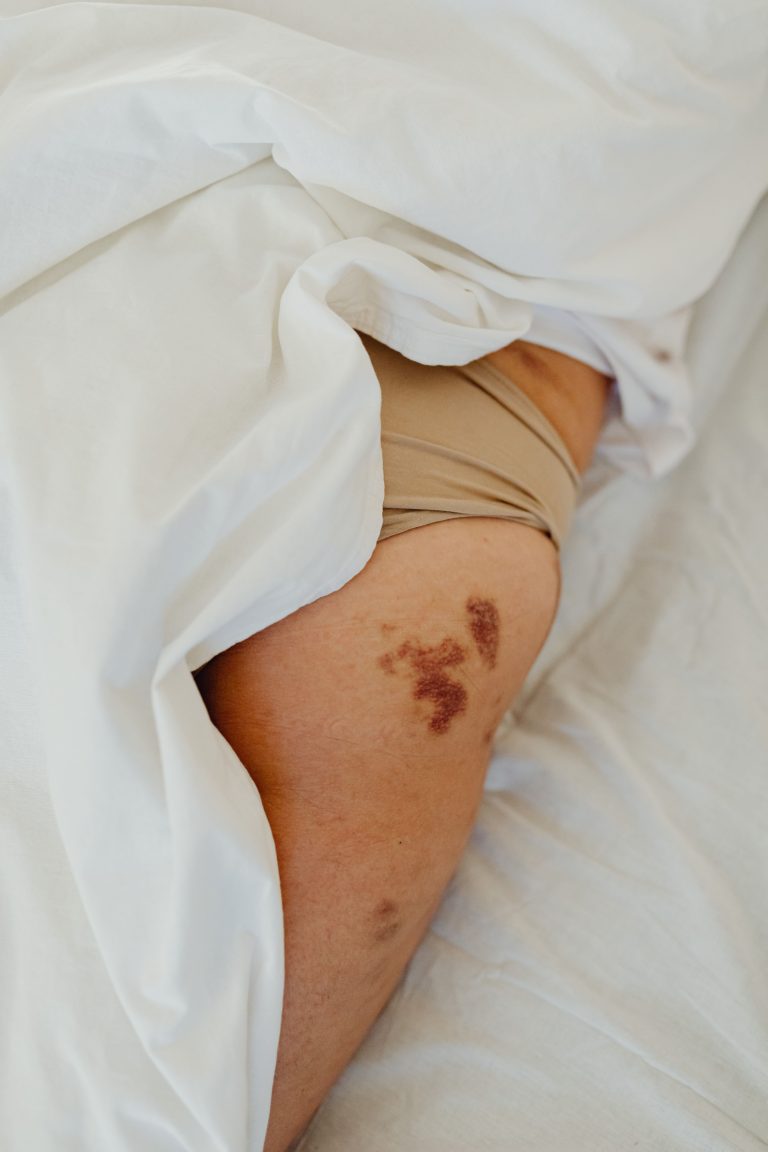
Pain from light touch or pressure, meaning something simply resting against you. A hand, a sheet, the weight of clothing on your legs. It’s often the first version people describe because it’s the easiest to notice and reproduce on demand.
Dynamic Mechanical Allodynia
Pain from movement across the skin. Brushing, stroking, clothing shifting as you move through a room. This is often worse than static pain, which surprises people, and it explains why getting dressed can be considerably harder than being dressed.
Thermal Allodynia
Pain from objectively mild temperatures. Cool air, tepid water, an ordinary room in November. Because the temperatures involved are unremarkable, this is the type most likely to be dismissed by somebody standing in the same room feeling perfectly comfortable.
Movement Allodynia
Pain from ordinary movement of a joint or muscle, with nothing touching you. It’s the least discussed of the four and the hardest to explain, because there’s no external cause to point at. Somebody watching you sees you move and then sees you react, with nothing in between.
Knowing which type you have is genuinely useful, not just academic. Each one responds to different adjustments, and dynamic allodynia in particular calls for changes that would do nothing for the thermal version. It also gives a clinician something specific to work with.
What Causes It
Allodynia is a feature of many conditions rather than a disease in its own right. It turns up in neuropathies including diabetic neuropathy, in spinal cord injury, in complex regional pain syndrome, in postherpetic neuralgia after shingles, and in fibromyalgia. It’s also extremely common in migraine, where scalp and skin sensitivity during an attack goes largely unnamed.
That last one is worth saying plainly, because it’s the version most people have already experienced. If you’ve ever had a migraine where your hair hurt, you know what this feels like. The difference for people with a chronic cause is that it doesn’t stop when the attack does.
Why People Don’t Believe You
This is the part that does the most damage, and it’s structural rather than anybody’s fault. “My bedsheet hurts” is not a sentence that survives a seven-minute appointment, because it sounds like exaggeration and there’s nothing visible to point at. The skin being touched is entirely normal, which is precisely the point and precisely what makes it hard to demonstrate.
So people learn to stop mentioning it, or to describe it in ways that undersell how much it affects them. That produces clinical notes that undersell it too, and the record quietly becomes evidence that it wasn’t serious. It’s a loop that’s very hard to break once it starts.
Having the word changes this completely. “Light touch is painful” is a description a clinician can work with, and “I have allodynia, and it’s dynamic rather than static” is a clinical finding. Same experience, entirely different reception, and the only thing that changed was the vocabulary.
That’s the single most useful thing on this page. If this is happening to you and nobody has ever named it, the name exists, and it’s been in the medical literature for decades. You are describing something real that has a definition.
The Practical Parts Nobody Writes About
Almost everything written about allodynia stops at the mechanism and the medication. What’s missing is the daily business of living in a body where ordinary contact is a problem, which is where most of the actual difficulty sits. None of what follows appears in a leaflet, and all of it comes up constantly among people who have this.
Clothing Becomes an Engineering Problem
Seams, labels, elastic, and waistbands all become variables you have to think about before you get dressed. Anything that shifts as you move is worse than anything that stays still, which is why dynamic allodynia makes the whole category harder. Seamless garments and wearing things inside out are both common solutions, and neither appears in any medical guidance I’ve seen.
Bedding Matters More Than Anything Else
It’s eight hours of continuous contact with no break and no way to adjust without waking up. Weight, texture, and how much a sheet drags as you turn all change the experience substantially, and the wrong combination costs you the night rather than a moment. Some people need a cradle or frame that holds bedding off the skin entirely, which sounds extreme until you’ve spent a week not sleeping.
Temperature Has to Be Managed Rather Than Tolerated
If cool air is painful, a draught stops being a minor irritation and a room’s temperature stops being a comfort preference. That’s genuinely difficult to explain to people sharing the space who are perfectly comfortable in it. Car air conditioning, supermarket freezer aisles and other people’s houses all become things you plan around.
Being Touched by People You Love Becomes Complicated
A hand on your shoulder, a hug, somebody sitting close enough to lean against. Flinching away from affection is its own kind of loss, separate from the pain itself and harder to talk about. It’s worth telling the people around you what’s happening rather than letting them quietly draw their own conclusions about why you’ve started pulling back.
The Conflict Nobody Acknowledges
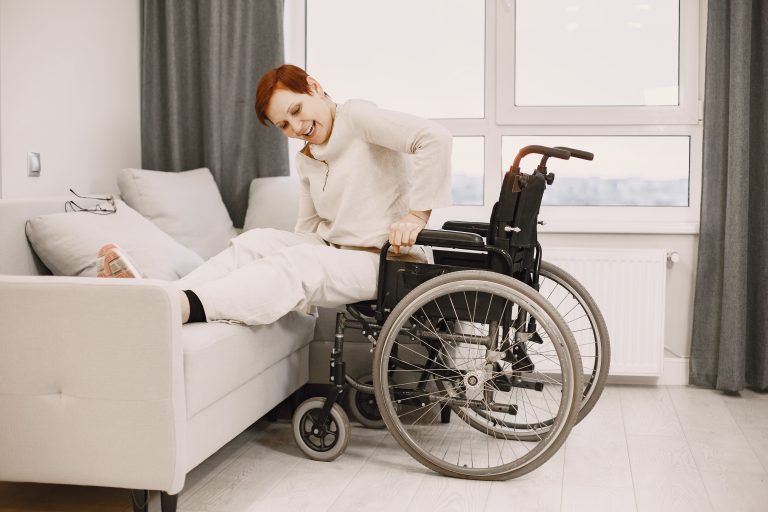
Here’s a tension that goes entirely unmentioned in the pressure injury literature, and it affects anyone who sits all day. If you use a wheelchair, you’re told to shift your weight every fifteen to thirty minutes and to check your skin daily. Both are essential, and I’d say so in any other context, since preventing bed sores depends on exactly that discipline.
But if touch and pressure hurt, every weight shift costs something. A daily skin check means handling an area that hurts to handle, several times over. So the prevention routine and the pain condition pull directly against each other, and nobody tells you how to resolve it.
There’s no clean answer,r and pretending otherwise would be useless. What I’d say is that the pressure injury risk is the one that puts you in bed for months, so the shifts happen regardless of what they cost. What changes is that pain management becomes part of the prevention plan rather than a separate problem, and that’s worth raising explicitly with whoever manages your seating.
It also costs energy, which is real and countable, not a figure of speech. Five or six painful weight shifts an hour is a meaningful part of a day’s capacity before anything else has happened. That arithmetic is covered in the piece on explaining your energy to somebody who doesn’t get it.
What Actually Helps
Broadly, there are three directions, and most people use more than one. The first is treating the underlying condition where that’s possible, since allodynia is a symptom rather than the disease itself. That route resolves it rather than managing it, and it’s not available to everybody.
The second is medication that acts on nerve signaling rather than ordinary painkillers. Standard analgesics tend to disappoint here, which is itself diagnostically useful, and the medications that do help are prescribed and monitored rather than picked off a shelf. If paracetamol and ibuprofen do nothing at all, say so, because that’s information.
The third is adjusting the environment, which you control directly. Clothing, bedding, temperature, and reducing unnecessary contact where you reasonably can. Some people also benefit from desensitization work with a physical or occupational therapist, and from approaches that target the nervous system rather than the skin, though what suits you depends entirely on the cause and the type.
Take the Word With You
The catalog I opened with doesn’t get shorter, and most of it blurs together into a general sense that your body has become unreliable in ways that are tedious to describe. This one can be pulled out of the pile, though, because it has a name and a mechanism and a definition, none of which were available to you when all you had was a sentence about a bedsheet.
So take the word with you. Say which type it is, what sets it off, and whether ordinary painkillers do anything, because that last one points at the mechanism rather than at your tolerance. It was real before it had a name, and having the name just makes it much harder to wave away.