
As a wheelchair user for over 20 years and the daughter of a nurse, pressure sores are like the Jason Vorhees of my care plan. There’s good reason for it. Pressure sores happen fast and can lay you out for months. The good news is that preventing bed sores is really not a hard concept, nor does it require expensive equipment or elevated medical experience.
Forgiving the obvious pun here, but the real pain in the ass with preventing pressure sores is the fact that you have to be diligent with it. So, coming up with a plan of attack that actually fits into your routine is the best way to address the issue that you’ll actually follow.
Pair Skin Checks With Daily Hygiene
If you’re fully wheelchair bound, hygiene and dressing take a lot longer to complete than the average person, so it’s a good time to take a closer look at your skin in the process. If you do not require assistance for these tasks, use a long-handled mirror or your phone camera to look for spots you can’t see directly. The whole check takes about two minutes once it becomes routine, and those are the two minutes most likely to save you months.
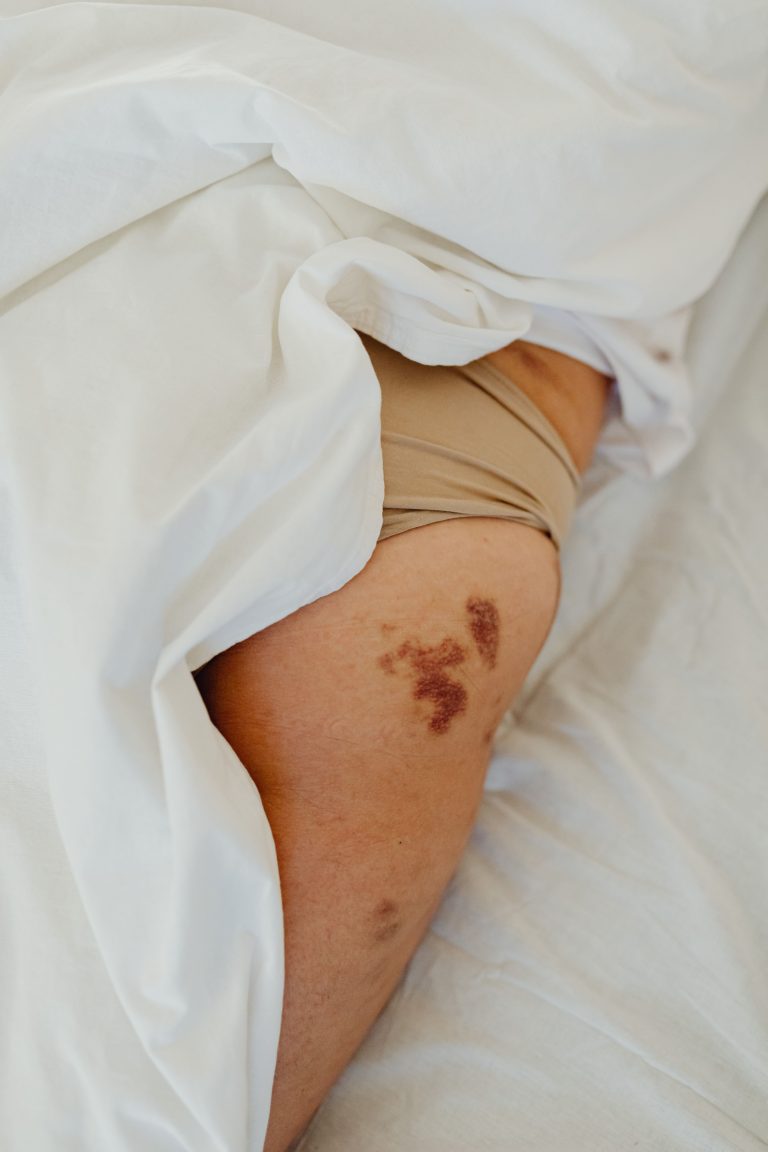
Look for skin that stays red or discolored, is a different temperature from the rest of your body, is firmer than it should be, or is blistered, cracked, or broken. On darker skin, color change can be subtle or absent, so let your fingertips do the checking. Photograph anything questionable and compare it the next day. Focus on your sit bones and tailbone first, then hips, heels, and anywhere your body contacts the chair frame. If you have had a sore before, that area goes to the top of the list.
Build Weight Shifts Into Habits You Already Have
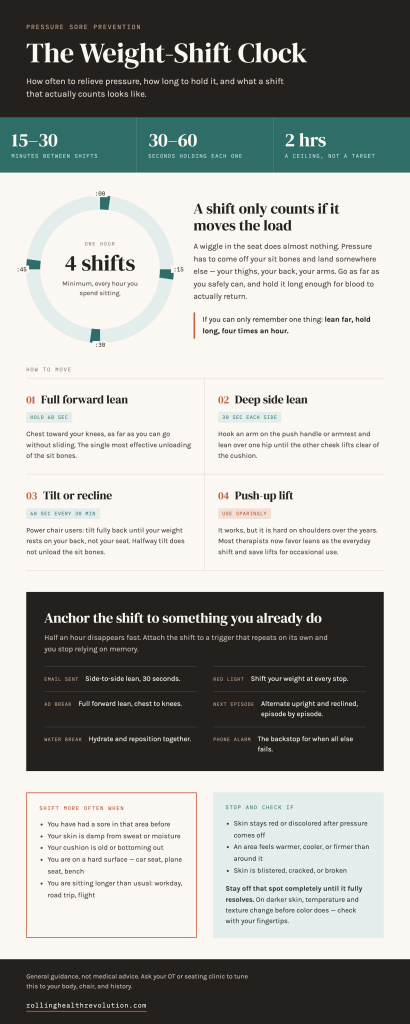
Every guide in the medical world will tell you that you need to relieve pressure every 15 to 30 minutes. Leaning forward and side-to-side moves pressure more than a small wiggle, so try to shift as far as you can, for as long as you can, without getting stuck or getting uncomfortable.
But with kids, stressful jobs, or even a good movie on TV, 30 minutes can go by in the blink of an eye. Try to anchor the pressure release with another repetitive task to help you remember.
Try these ideas:
- Each time you send an email, lean side to side for 30 seconds.
- Shift your weight every time you hit a red light or a stop sign while traveling.
- Do a full forward lean at each commercial break or episode credit roll. Try to lean until your chest approaches your knees.
- If you use a power chair with tilt or recline, tilt fully back for at least 60 seconds every half hour.
- Again, for power wheelchairs, watch one episode sitting upright, then recline until your weight is resting on your back, for the next episode.
- Rely on your phone alarms for hourly reminders when all else fails.
Protect Your Skin During Transfers
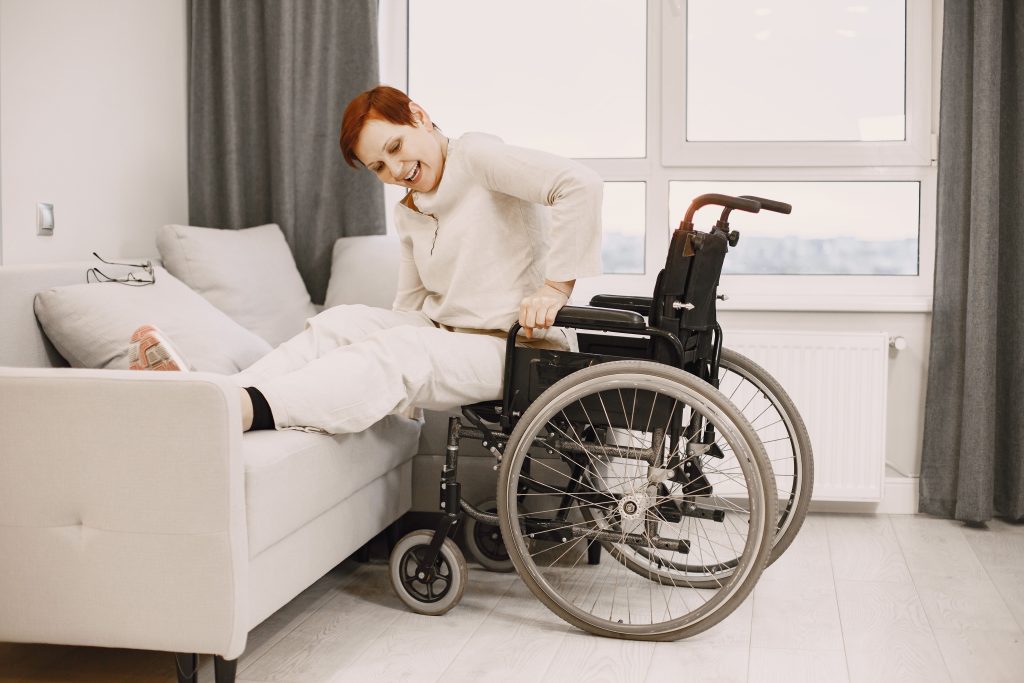
Pressure gets the headlines, but if you’re able to transfer independently by sliding across a transfer board or surface, you also need to be wary of shear damage. Transferring motions can stretch and tear the deeper layers of your skin without showing any external damage until it’s a massive problem.
The basic rules of thumb for transferring are:
- Lift as much as you slide
- Keep weight on your arms
- Move in small, lifted hops rather than a long drag
- Keep transfer surfaces smooth and dry
- Opt for clothes that slide more easily
- Check transfer boards for chipped or splintered edges
- Refer to an occupational therapist to fine-tune a routine to protect your skin and shoulders during transferring
Feed Your Skin From the Inside
Skin under daily pressure needs raw material to stay resilient. Protein is the big one, and many wheelchair users run short without realizing it. Make protein part of every meal, drink enough water that your urine runs pale, and do not ignore overall calories, because underfed skin is fragile skin.
Smoking deserves its own sentence here. Nicotine constricts the small blood vessels your skin depends on, and smokers develop pressure sores more often and heal them more slowly. If you smoke and have ever had a sore, quitting is the highest-value prevention step on this entire page.
Your Cushion Is Prevention Equipment, So Treat It That Way
A pressure relief cushion is not a comfort accessory. It is the piece of equipment standing between your sit bones and your chair sling for twelve or more hours a day. Check it weekly for bottoming out, flattened spots, or a worn cover, and learn its expected lifespan, because foam that looks fine can be structurally done. If your weight, posture, or chair has changed since the cushion was fitted, it may no longer fit the job. And if your cushion is more than a few years old, put the replacement conversation on your calendar now.
Surviving Long Sits Without Paying For It
Workdays, road trips, or flying with a wheelchair concentrate hours of pressure with fewer opportunities to move around. All three scenarios pose different challenges, but it really comes down to intentional mindfulness. While at work, set alarms or calendar reminders to move around. If you pair repositioning with hydration breaks, you can reinforce two healthy habits at once.
Road trips and flights are less within your control, so they require more planning and open communication. Road trips need real stops where you can fully remove pressure from your tailbone, as well as getting your feet elevated to help with circulation. When traveling by plane, contact the airline about bringing your own seat cushion as a preventative measure. Airline seats are going to be harsher on your body than your own setup.
Preventing Sores in Bed
Prevention does not clock out at night, and how to prevent bed sores is really the same question in a different position. Heels and hips take over from sit bones once you are lying down. Your mattress and your pillow strategy matter as much overnight as your cushion does all day.
Set yourself up so good positions are the easy ones. A pillow under your calves keeps your heels floating off the mattress all night. If you side sleep, arrange pillows so you rest at a partial tilt rather than directly on the point of your hip. If you cannot reposition yourself during the night, talk with your doctor about a pressure-reducing mattress or overlay, and treat the morning skin check as non-negotiable, since night damage shows up at dawn.
Act on the First Sign, Not the Third
If a spot stays discolored after the pressure has been off it, stay off that area completely until it fully resolves, and rethink whatever caused it. That is the whole intervention at the earliest stage, and it works. If skin has already opened, that has moved beyond prevention, and our pressure injury prevention guide walks through cleaning, dressings, staging, and the warning signs that need a doctor the same day.
Frequently Asked Questions
How often should wheelchair users shift their weight?
Every 15 to 30 minutes while seated, holding each shift for 30 to 60 seconds so blood flow fully returns. A full forward lean or a deep side lean relieves the sit bones far better than a small adjustment. If remembering is the hard part, anchor shifts to habits you already have or set a repeating phone alarm.
What do early pressure sores look like?
A patch of skin that stays red or discolored when pressed instead of blanching pale and pinking back, or an area that feels warmer, cooler, or firmer than the skin around it. On darker skin tones, temperature and texture changes are often the first detectable sign. If you find a spot like that, stay off it completely until it returns to normal.
Can pressure sores be prevented completely?
The large majority can. Consistent weight shifts, daily skin checks, a properly fitted cushion, dry skin, and solid nutrition prevent most sores, which is why health agencies consider the majority of these wounds avoidable. The habits doing the heavy lifting are the boring ones: shifts, checks, and a cushion that still does its job.
How long can you sit before a pressure sore starts?
Damage can begin in under two hours of unrelieved pressure, and in even less time on a poor surface or damp skin. That is why relief every 15 to 30 minutes matters rather than one break every few hours. Your own window depends on your skin, your cushion, and your history, so treat two hours as a ceiling, not a target.
The Bottom Line
How to prevent pressure sores in a wheelchair comes down to a short list done daily. Check your skin once a day, shift your weight on a schedule your real life can keep, lift instead of slide when you transfer, stay dry, eat enough protein, and treat your cushion like the medical equipment it is. None of it is dramatic, and that is the point. The best sore is the one that never gets the chance to start.




4 Comments