
Most people do this in the wrong order. They start with the thing that feels most urgent, usually the bathroom, spend most of the budget on it, and then realize they still can’t get through the front door without help.
The order matters more than the individual choices. So does knowing what you can get somebody else to pay for, which is the part almost nobody tells you about.
Do Them in This Order
If money is limited, and it usually is, work outward in this sequence.
Getting into the house comes first. If you can’t get in independently, nothing inside matters. Then getting to a bathroom. Then getting to a bed. Then everything else, in whatever order suits your life.
That sounds obvious written down. It stops being obvious when a contractor is showing you a beautiful roll-in shower and the front step is still four inches high.
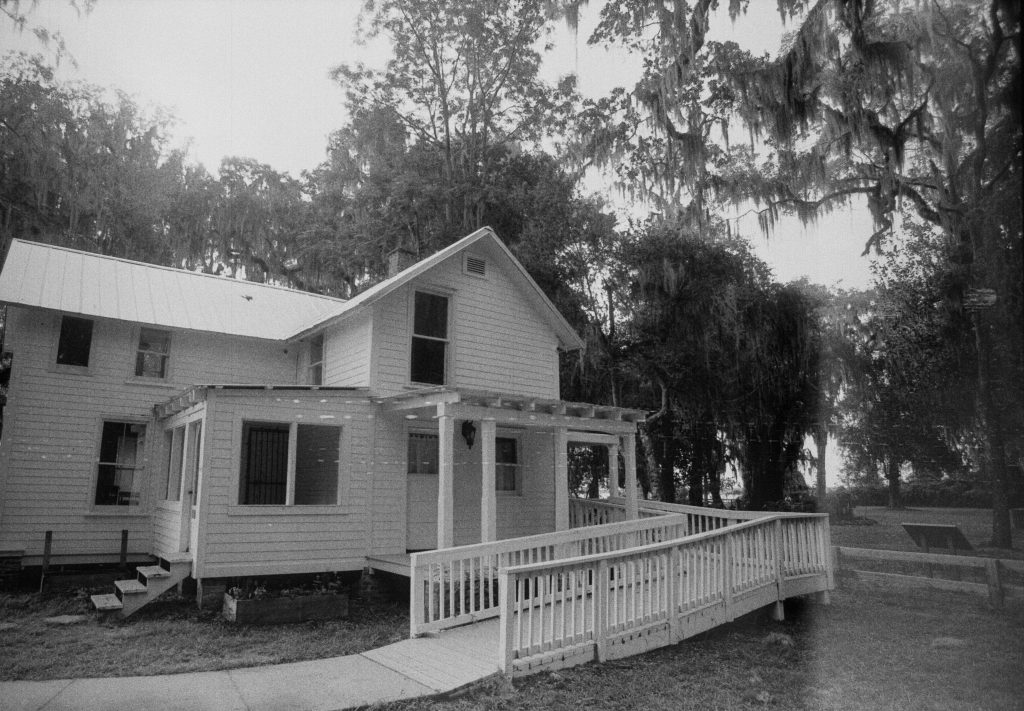
Getting Through the Front Door
A ramp is the obvious answer and often the wrong first move, because a ramp needs more room than people expect. The standard slope used in public buildings is one inch of rise for every twelve inches of run, so a two-foot rise needs twenty-four feet of ramp plus landings. That’s a lot of yard.
Before you commit to that, check whether there’s a lower entrance. Back doors, garage entrances, and side doors are frequently one step instead of four, and converting the easy door is cheaper than ramping the hard one. Plenty of people end up using the garage as their main entrance and never regret it.
Threshold ramps handle small rises, meaning single steps and raised door sills, and cost a fraction of a full ramp. Portable and modular aluminum ramps sit somewhere in between and have the advantage of coming with you if you move, which matters if you rent. Sizing one is less obvious than it looks, and it’s worked through properly in this guide to how long a wheelchair ramp needs to be.
Whatever you build, put a flat landing at the top big enough to sit on while you deal with the door. A ramp that ends at a door you have to open while holding position on a slope only works with a helper.
Doorways and Hallways
This is where the cheapest fix on the entire list lives.
Standard interior doors are often too narrow once you account for the door itself sitting in the opening. Widening a doorway means framing, drywall, and possibly electrical, and it costs real money. But swing clear offset hinges move the door completely out of the opening when it’s open, and they typically buy you close to two inches of clear width for the price of hardware and an hour of work.
Two inches doesn’t sound like much. It’s frequently the difference between a doorway that works and one that takes the skin off your knuckles every single day.
Removing a door entirely is free and works fine anywhere privacy isn’t needed. Pocket doors and barn doors solve the swing problem in tight hallways. And lever handles beat round knobs for anyone with limited grip, which is a twenty-dollar fix people put off for years.
The Bathroom
This is the expensive one and the one most likely to be quoted as a full renovation when it doesn’t need to be. Roll-in showers, threshold removal, grab bar placement, and sink clearance all have cheaper versions than the ones a contractor will lead with.
It’s a big enough subject that it has its own guide on setting up an accessible bathroom without a full renovation, which covers what’s worth paying for and what isn’t.
Kitchens and Counters
Full kitchen remodels are the most expensive item on this list and rarely the best value. The high-impact changes are smaller.
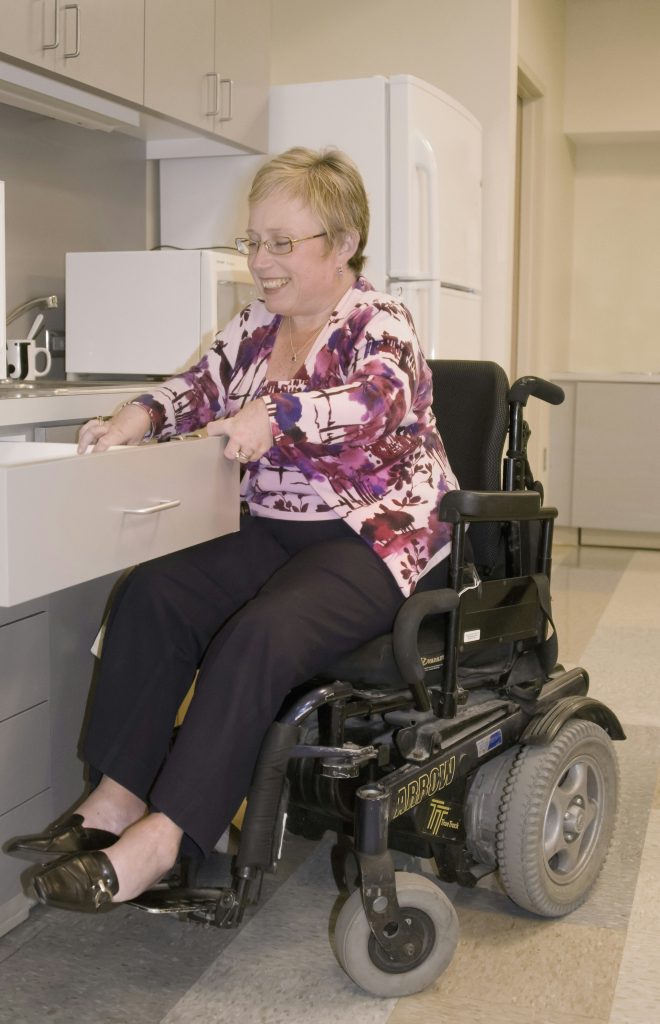
Open knee space under a sink or a section of counter costs a fraction of new cabinetry and changes what you can actually do while standing or sitting at a work surface. Pull-out shelves in base cabinets turn unreachable back corners into usable storage. A side-opening oven means you’re not reaching over a hot door. And moving the microwave off the over-range position, which is the least accessible spot in most kitchens, is usually just a matter of finding it a home on the counter.
Wrap the pipes under any sink you’re rolling under. Bare hot water pipes against a leg you can’t feel is a burn you won’t notice happening.
Flooring, Which Everyone Forgets
Thick carpet is genuinely hard work to push through, and it wears out casters. Deep pile with a thick pad is the worst combination.
Hard flooring, low-pile commercial carpet, or luxury vinyl plank all roll better. Transitions between rooms matter as much as the flooring itself, because a raised threshold strip between two rooms is a small daily obstacle in a house you cross twenty times a day. Flush transitions or beveled strips fix that cheaply.
The Ones Nobody Puts on the List
- Switch and outlet height. Standard outlets sit low and standard switches sit high. Moving them into a comfortable seated reach range is electrician work, but it’s cheap electrician work, and it affects every room.
- Turning space. A wheelchair needs roughly a five-foot circle to turn around fully. Rearranging furniture is free and sometimes solves what looked like a construction problem.
- Washer and dryer. Front-loading beats top loading. Pedestals help if you can reach over them, and hurt if you can’t.
- Window hardware. Cranks and latches at standard height are unreachable from a chair, and nobody thinks about it until there’s a reason to open a window fast.
- Smart home devices. They aren’t a substitute for physical modification, but they can cheaply cover some of the gap, and smart home technology for wheelchair users can handle lights, locks,, and thermostats without touching the wiring.
One myth worth killing here. The ADA does not apply to private homes. Those measurements everyone quotes, the thirty-two-inch doorways and the one-in-twelve ramps, come from standards written for public buildings. They’re useful benchmarks, and they’re not legal requirements in your house, which means you can deviate where it makes sense for your body and your chair.
Renters’ Rights To Know
A landlord cannot refuse a reasonable modification. That’s federal law under the Fair Housing Act, and it’s one of the most useful things a disabled renter can know.
The catch is who pays. In private rental housing, the tenant generally covers the cost of the modification, while the landlord’s obligation is to permit it. Disability Rights North Carolina’s explainer on reasonable modifications lays out the distinction clearly, and it’s the same everywhere. In federally subsidized housing, the provider is generally the one who pays.
A few practical points that come out of the HUD and DOJ joint statement on reasonable modifications.
- Modifications aren’t limited to the inside of your unit. Common areas, entrances and parking count.
- A landlord can require you to restore the interior when you leave, if the modification would make the unit harder to re rent. Grab bars usually don’t meet that bar. A roll in shower might.
- Put the request in writing. It creates a date and a record, and it costs you nothing.
- A landlord can ask for documentation of the disability related need if the need isn’t obvious, but they can’t demand your medical records or charge you an extra deposit for asking.
Choose removable versions where you can. Portable ramps, tension mounted grab bars and clamp on hardware sidestep the restoration question entirely and move with you.
How to Pay for It
Here’s the thing most people get wrong. Medicare does not cover home modifications. Medicaid often does, and the two get confused constantly.
Medicaid Waivers
Home and Community Based Services waivers exist because keeping someone at home costs the state less than a nursing facility. Most states run at least one, and home modifications usually appear in them under the name environmental accessibility adaptations. That’s the term to use when you call, because asking about home modifications will sometimes get you a no from someone who’d have said yes to the right phrase.
Ramps, doorway widening, roll in showers, grab bars and lifts are the typical covered items. Disability Rights South Carolina’s guide to HCBS waivers shows how these are structured, and the structure is broadly similar state to state even though the names, caps and waiting lists are not.
What to expect. You need to be Medicaid eligible. A physician usually has to confirm medical necessity, and an occupational therapist often has to evaluate the home. The work generally has to be done by an approved contractor. There’s usually a lifetime cap. And in a lot of states there’s a waiting list, so start the conversation before you need it.
Other Places Money Comes From
- Veterans. The VA runs several housing grant programs for service connected disabilities, and they’re considerably more generous than most other options.
- Rural homeowners. USDA runs a home repair loan and grant program for low income owners in rural areas, and accessibility work can qualify.
- Vocational rehabilitation. If a modification is what lets you work or get to work, your state VR agency may fund it. Underused and worth asking about.
- Nonprofits. Rebuilding Together and Habitat for Humanity both run programs that do accessibility work at low or no cost, and local independent living centers usually know who else is operating in your area.
- Money Follows the Person. If you’re moving out of a facility and back into the community, this program exists specifically to fund that transition, including modifications.
If you’re at the earlier stage of sorting out benefits at all, the difference between the programs is worth understanding first, and how disability claims actually get approved covers the non medical requirements that trip most people up.
If You Have Two Hundred Dollars, Not Twenty Thousand
Almost everything above assumes a budget. Here’s what to do without one, roughly in order of how much difference it makes per dollar.
Swing clear hinges on the two worst doorways. Lever handles to replace knobs. A threshold ramp at whichever door you use most. Removing a door that doesn’t need to be there. Moving furniture to open up turning space. Pipe insulation under any sink you roll under. And taking up one bad rug, which costs nothing and immediately makes a room easier to cross.
None of that requires a permit, a contractor or a landlord’s signature. It won’t make a house accessible. It’ll make a house noticeably less hostile, which is often the difference between managing and not.
The Part That Actually Matters
A house that fights you costs you something every day, in energy you don’t get back and in things you stop doing because they’re too much trouble.
You don’t need the whole list. You need the front door, a bathroom, a bed, and then whatever the next most annoying thing is. Work outward from there, ask about the waiver before you assume you’re paying for it yourself, and get the cheap fixes done while you’re waiting on the expensive ones.
Frequently Asked Questions
Does Medicare Pay for Home Modifications?
No. Original Medicare doesn’t cover ramps, grab bars, doorway widening or bathroom modifications. Some Medicare Advantage plans have started offering limited benefits in this area, so it’s worth checking your specific plan, but don’t assume it.
Can a Landlord Say No to a Wheelchair Ramp?
Generally no, if the request is reasonable and related to a disability. What the landlord can do is require that you pay for it in private housing, and require restoration when you move out if the modification would make the unit harder to re rent.
What Is the Cheapest Accessibility Modification?
Swing clear offset hinges. They gain close to two inches of clear doorway width for the cost of hardware, and they’re reversible, which makes them ideal for renters.
Do Home Modifications Have to Meet ADA Standards?
Not in a private home. The ADA governs public accommodations and commercial facilities. The measurements are useful reference points, but you’re free to build to what actually works for you.
Where Do I Start If I Don’t Know What I Need?
An occupational therapist home evaluation. It’s the single most useful thing on this page, it’s often covered by insurance, and it produces a written assessment that also supports a waiver application later.