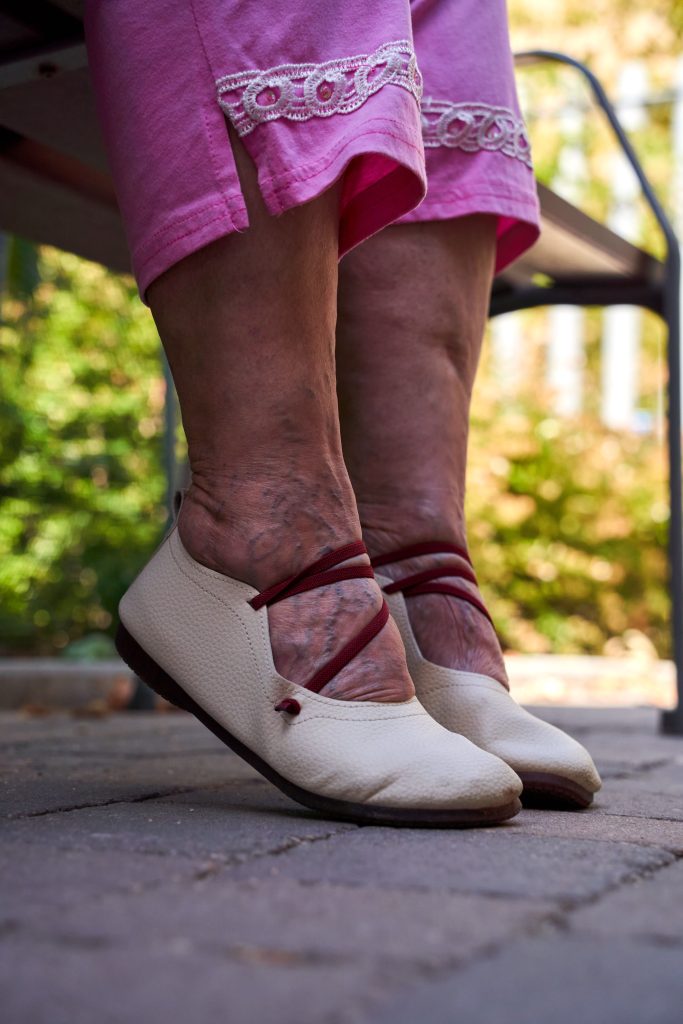
I’ve used a powerchair for more than twenty years, and I still can’t stand my footrest. My feet are more comfortable hanging free, so that’s where they spend most of the day, and it’s a preference I’ve never been willing to give up. It also means circulation is something I check on daily rather than something I get to ignore.
Most writing about poor circulation assumes you can fix it by walking more. That advice is useless if walking isn’t on the table, and it’s worse than useless if it’s the only thing you’re offered. What follows is the version for people whose legs are along for the ride.
Poor Circulation Is Two Different Problems
The phrase gets used as though it describes one thing, and it doesn’t. Blood has to get down to your feet through the arteries and back up to your heart through the veins, and a failure in either direction ends up with the same label. The two have different causes and different symptoms, and working out which one you’re looking at is the first useful thing you can do.
Arterial problems mean blood isn’t getting down there properly. That looks like feet that are cold to the touch, pale or bluish skin, pain at rest or with activity, and cuts that take far longer to close than they should. It’s the more urgent of the tw,o and it deserves a phone call rather than wait-and-see.
Venous problems mean blood isn’t getting back up. That looks like swelling that’s worse by evening, heaviness, aching, and, over time, changes in the skin around the ankle. When the valves in the leg veins stop working properly, blood pools and pressure builds, which is what produces the swelling and eventually the skin damage.
Knowing which one you have matters because the treatments pull in opposite directions. Compression is a mainstay for venous problems and needs real caution if you have significant arterial disease, which is why the guidance is to get assessed rather than to buy something and hope. Plenty of people have both at once, which is exactly why guessing is a bad plan.
The Calf Pump Is the Part You Lost
Your veins don’t have a pump of their own. Getting blood from your feet back up to your heart works against gravity, and the mechanism that does most of that work is your calf muscles squeezing the deep veins every time you take a step. It’s usually called the calf pump, and it’s doing a job most people never knew was a job.
If you don’t walk, that pump doesn’t run. Blood still arrives at your feet without any trouble, because your heart handles that part, but the return trip has lost its main engine. That’s the whole mechanism behind why sitting all day produces swollen ankles in people with no vascular disease whatsoever.
The research bears this out in people who aren’t disabled at all. In one study of adults sitting quietly with their legs hanging down, a substantial share showed measurable fluid pooling in the lower leg within thirty minutes, and stimulating the calf pump reversed it. If half an hour does that to someone who is going to stand up afterward, it’s worth thinking about what a fourteen-hour day does.
This applies whether you use a manual chair or a power chair. Pushing a manual chair is real cardiovascular work, and it’s good for you, but it’s your arms doing it, and your arms can’t pump your calves. Nobody says this out loud, so manual users often assume they’re covered because they’re active.
Free Hanging Feet Make the Job Harder
Here’s the part I have to be straight about, including with myself. Legs hanging unsupported is the hardest position for venous return, because the further your feet sit below your heart, the more pressure the veins at the bottom are working against. Every guide on this subject says to keep the legs elevated and supported, and every one of them is right.
I still don’t use my footrest. It’s uncomfortable in a way that affects my whole day, and comfort I can feel right now tends to beat a risk I can’t. I’d guess that’s true for a lot of people reading this, and pretending otherwise just means you stop reading.
So the honest position is this. If you’re not going to change how you sit, the monitoring and the other countermeasures stop being optional extras and become the actual plan. You’re choosing to carry more risk, which is allowed, but it only works if you’re watching for the consequences instead of hoping they don’t turn up.
What Helps When Walking Isn’t an Option
Elevation in whatever form your chair allows.
Power tilt, recline, and elevating leg rests all cut the pressure your veins are working against, and getting your feet closer to heart level is what does the work. If your chair has these functions and you don’t use them, that’s the cheapest change available to you. If it doesn’t, elevating when you transfer to a bed or a sofa still counts.
Ankle movement, active or passive.
If you have movement at the ankle, pointing and flexing your feet fires the calf pump directly, and it’s worth doing several times a day rather than once. If you don’t, passive range of motion done by someone else produces some of the same effect. It feels far too small to matter, which is exactly why almost nobody keeps it up.
Compression, fitted rather than guessed.
Graduated compression is a standard treatment for venous pooling, and it works, and it’s also the thing that needs assessment first because of the arterial question. Getting the grade and the fit right matters more than the brand does. Worth saying plainly too that getting them on is a genuine hassle if your hands or your reach are limited, so factor that in before you commit.
A seating assessment you actually follow up on.
How your chair is set up changes where the pressure sits and how your legs are positioned all day, and it’s a solvable problem rather than a fixed one. This is squarely the territory of what an occupational therapist does, and seating is one of the areas where the difference shows up fast. Ask specifically about leg position rather than only about the cushion.
The unglamorous ones still count.
Staying hydrated, not smoking, keeping on top of blood pressure and blood sugar, and moving whatever you can move all affect vascular health directly. None of it is interesting, and all of it is in the guidelines for a reason. They’re also the parts that stay within your control when the rest of it isn’t.
What to Check and How Often
Daily is the right frequency, and it takes under a minute once it’s a habit. Look at both legs together rather than one at a time, because the comparison is what tells you something, and asymmetry is the finding that matters most. Check for swelling, for how deep the sock line is when you take socks off, for skin color, and for temperature against the back of your hand.
Look at the skin properly while you’re down there. Sustained venous pressure damages skin over time, and the ankle area is where that turns up first as discoloration or thickening. Anyone sitting all day is already checking skin for other reasons, so fold this into the routine you use for preventing pressure sores rather than building a second one.
What you’re building is a baseline, not a daily verdict. One puffy evening after a hot day means very little on its own, and a slow change over three weeks means a great deal. Photos on your phone beat memory here, because memory quietly adjusts to whatever it has been seeing lately.

When It Isn’t Just Circulation
Swelling in one leg and not the other, especially with warmth, redness, or new pain, needs same-day attention rather than a note to mention it next visit. That pattern can indicate a clot, and reduced mobility is itself a risk factor for one. If you have reduced sensation, you may not get the pain that would normally make this obvious, so the visual difference between your two legs is doing the work.
A foot that’s cold, pale,e and painful at rest points to the arterial side, and so does a wound on the foot or ankle that isn’t healing. Those aren’t wait-and-see findings either. Say the word circulation when you call, and say whether it’s one leg or both.
Any sudden change from your own baseline is worth a call even when it doesn’t match a pattern in an article. You know what your legs usually look like at eight in the evening and nobody else does. That familiarity is real clinical information, so use it rather than discounting it.
Know Your Own Normal
The reason this topic gets handled so badly for people who sit all day is that the standard advice is one sentence about walking more. Once that’s off the table, most articles have nothing left to say, which leaves you assuming there’s nothing to be done. There’s a fair amount to be done, and almost all of it is small and repeatable.
Elevate when your chair lets you, move the ankles you can move, get compression assessed rather than guessed, and look at both legs every day. If you make a choice that raises your risk, like mine about the footrest, then the watching is the price of the choice rather than an optional extra. That’s a trade you’re allowed to make with your eyes open.
This is general information rather than medical advice. Circulation problems have several different causes with different treatments, and some of them need urgent assessment, so anything new or one-sided should go to a clinician.