
A wheelchair shows up as medical equipment. Somebody measures you, an insurance company argues about it, and eventually a piece of gray and black machinery arrives that you’re going to spend most of your waking life in. Nobody hands it over with instructions on how to make it yours.
That part’s on you, and it’s more worth doing than it sounds.
This Isn’t As Frivolous As It Looks
Personalizing a chair gets treated like a nice extra. It isn’t. Clinicians who fit pediatric mobility equipment treat it as part of the job, because a device most users experience as an extension of themselves needs to actually look like it belongs to them. The clinical guidance on wheelchair and power mobility for children specifically calls out color, patterns, and custom spoke guards as things a young user should get a say in.
There’s also research on what happens afterward. A study on personalizing mobility aids in long-term care found that decorated devices pulled people into conversation, with strangers opening on the sports team, the cartoon character, or the hometown rather than on the chair itself. The researchers behind that mobility makeover project found personalization measurably increased social participation.
Which matches what anyone in a chair already knows. People either avoid your eyes or ask what happened to you. A chair with something on it gives them a third option, and the third option is being treated like a person with taste instead of a diagnosis on wheels.
Wheel Lights
Safety and style don’t usually come hand in hand, but with wheel lights they do. These LED lights attach easily to your wheels, light up your path, and make sure you’re seen in low light. Whether you’re getting through a crowded concert or just out for an evening roll, they add some fun while making you a lot harder to miss.
They’re not only about visibility either. They come in enough colors and patterns to actually say something about you. I think these are the perfect wheelchair accessories for kids, though honestly every age appreciates the cool factor. They look easy to install, and most are weather-resistant.
If you want the version that never needs batteries, reflective spoke beads and reflective tape do a chunk of the same visibility work for a few dollars.
Wheel Covers And Spoke Guards
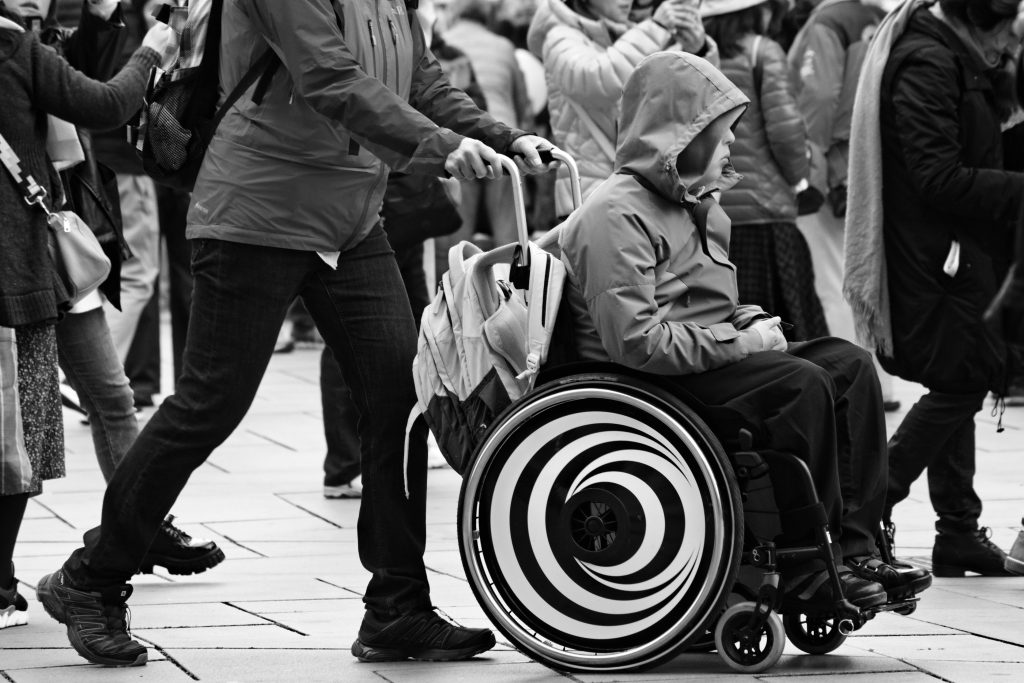
Spoke guards are the single biggest surface on a manual chair and the most underused. They’re a solid disc that clips over the spokes, and they do two jobs at once. They keep fingers, fabric, and shopping bag handles out of the wheels, and they’re a canvas.
You can buy them printed with just about anything, from galaxies to camo to team colors, and plenty of small makers will print a custom design. Reflective versions add night visibility. If your chair lives outdoors, that’s the version I’d want.
Decals, Stickers, And Vinyl
This is the cheapest way to change how your chair reads, and the fastest to undo when you get bored.
The disability sticker scene is genuinely funny and worth a browse. There’s a whole subgenre of chair humor, and putting it where people can see it does a specific job: it tells a stranger that you got there first, that you’re allowed to joke about this, and that they can relax. Frame decals, seat-back vinyl, and small stickers on the battery box all work.
Vinyl comes off. Adhesive residue on a powder-coated frame does not always come off gracefully, so test a small patch somewhere hidden before you commit to a big piece.
Upholstery, Seat Backs, And Bags With An Opinion
Replacement seat upholstery and backrest covers exist in far more than hospital gray, and swapping them changes the whole read of the chair from three feet away. Custom printed backrest covers are a small industry at this point.
The bag hanging off your push handles is doing the same work. If you’re going to have one anyway, it might as well be something you’d have picked in a shop rather than the beige one that came with the chair.
Casters… The Part NOBODY Thinks About
The little front wheels come in colors. Almost nobody realizes this. They’re small, right at eye level for anyone looking down at your chair, and colored or light-up casters change a chair’s character for what is usually a modest cost. If you’re already replacing worn casters, it costs nothing extra to make them a color you like.

Sound
A small Bluetooth speaker clipped to the frame turns a chair into a thing that arrives with music, which is a very different social object than a chair that arrives silently. Waterproof ones survive rain and shower rooms. Keep the volume reasonable in shared spaces, because nobody has ever been charmed by a stranger’s playlist at full volume.
Seasonal And Costume Builds
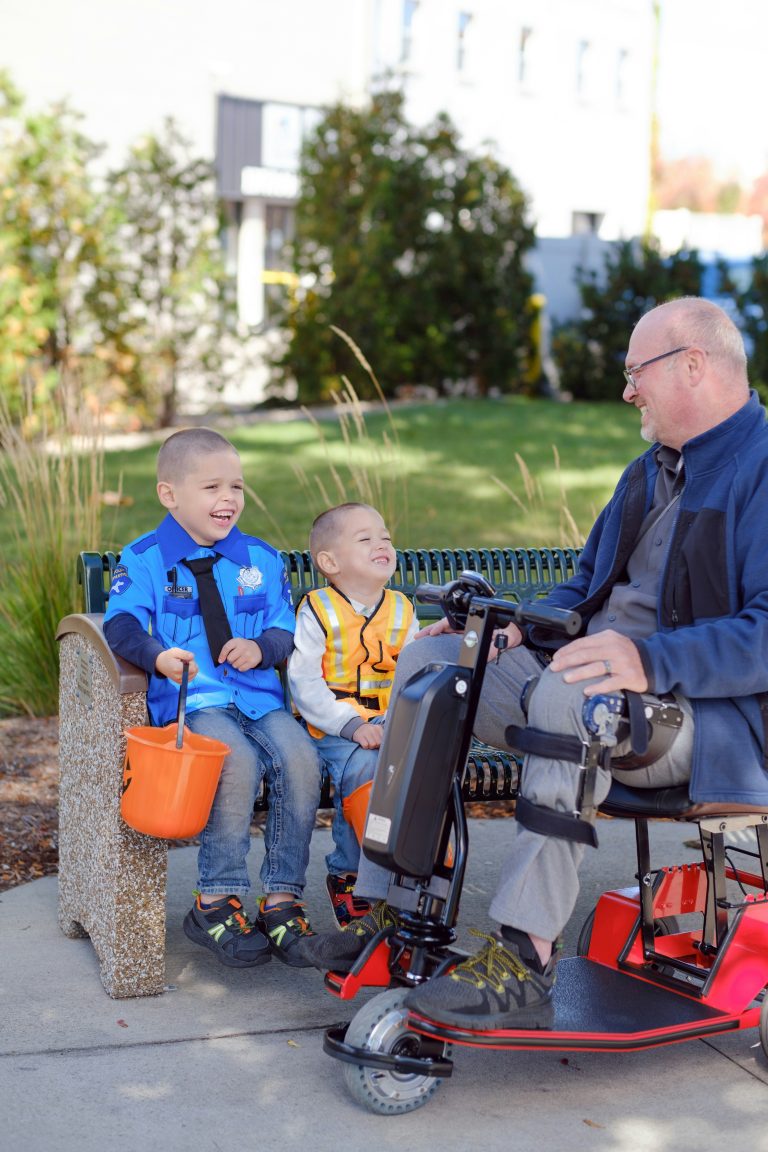
Halloween is where wheelchair customization gets genuinely spectacular. A chair is a chassis, and people build entire vehicles, thrones, spaceships, and animals on them. Some communities do nothing but design these, and some will build one for a kid for free.
Holiday lights, wreaths on the backrest, and seasonal spoke guards are the low-effort version. String lights are the same technology as wheel lights and cost less.
Whatever you build, keep it removable. A chair that can’t fit in a car or get down a hallway is a costume that ended your evening early.
Especially For Kids
This is where all of it matters most.
A kid whose chair looks cool has a different day at school than a kid whose chair looks medical. Other children approach a chair covered in dinosaurs. They keep their distance from a piece of hospital equipment. That difference plays out every single recess, and it shapes how a child comes to think about their own chair.
Kids also grow out of chairs fast, which is worth planning around. Stick to decoration that transfers or that you won’t mind losing, and let them pick it themselves. A kid who chose their own spoke guards owns that chair in a way that no amount of adult reassurance produces. When they do outgrow it, the chair still has a life ahead of it, and organizations take donated medical equipment and get it to a family who needs it.
A few things to keep functional
- Don’t cover the lights or reflectors that came with the chair.
- Keep the joystick and controls clear. Stickers on a control panel are a bad idea for the same reason stickers on a car’s dashboard are.
- Nothing that catches. Streamers, fringe, and loose fabric near a moving wheel end badly.
- Watch the weight. On a manual chair especially, every added ounce is an ounce your shoulders push.
- Keep it removable if you fly. Anything that isn’t part of the chair is something an airline can lose, and flying with a wheelchair already has enough failure points.
Frequently asked questions
What are the easiest fun wheelchair accessories to start with?
Wheel lights and stickers. Both are cheap, both go on in minutes, and both come off just as fast if you change your mind. Spoke guards are the next step up and give you the biggest visual change for the money.
Can you decorate a wheelchair that insurance paid for?
Generally yes, since the chair is yours once it’s delivered. What you want to avoid is anything permanent or anything that interferes with the equipment’s function, because that can complicate a repair or a warranty claim. Removable decoration sidesteps the whole question.
Will decorating a wheelchair void the warranty?
Adhesives and clip-on accessories don’t usually cause a problem. Drilling, rewiring, or anything that alters the frame or the electronics can. If you’re modifying a powerchair beyond stickers and clips, ask the supplier before you do it, not after.
What are the best wheelchair accessories for kids?
Wheel lights and printed spoke guards, and let the kid choose the design. The point isn’t the accessory; it’s that they decided on their own equipment. That’s the part that does the work.
Can a business make you remove decorations from your chair?
No. Under the Americans with Disabilities Act, businesses and public facilities have to allow people with mobility disabilities to use their wheelchairs anywhere the public can go, and the ADA National Network fact sheet on wheelchairs and mobility devices lays out how narrow the exceptions actually are. Nobody gets to object to your spoke guards.
The Actual Point
None of this makes a chair work better. That’s the whole appeal. For the gear that does, the bags, trays, and cup holders you actually use are a separate list.
Everything else about mobility equipment is a compromise negotiated between your body, a clinician, and an insurance company. Decoration is the one part of it that’s purely yours, and it’s the only decision in the entire process where the correct answer is whatever you like.


3 Comments